
Ride legally and safely
E-bikes are changing the way communities move. Before you hit the trail, know the rules that keep everyone safe.
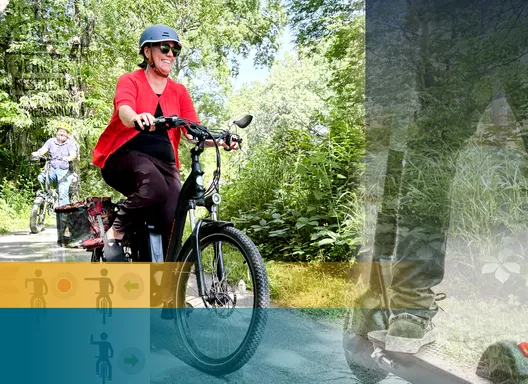
Verify Before You Buy
Not All “E-Bikes” Are Legal E-Bikes
- Some devices marketed as e-bikes can travel at much higher speeds and may not be legal or safe on public roads or trails. Use the chart below to compare devices and spot the differences.
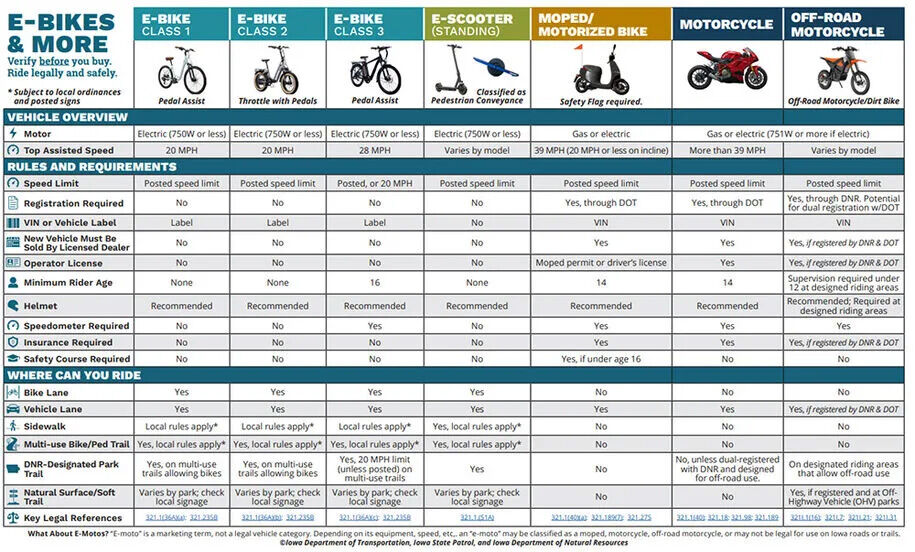
Know the Differences Before You Ride
- E-bikes are heavier than traditional bicycles and can reach speeds of 20–28 mph.
- E-scooters’ smaller wheels make them more susceptible to cracks, bumps, and debris, which can be challenging for younger or inexperienced riders.
- Both e-bikes and e-scooters require more distance to stop compared to traditional bicycles.
Parents & Caregivers
Strongly consider the age, maturity, and experience of the rider before allowing use.
Use the Proper Helmet: Traditional bicycle helmets may not provide enough protection at higher e-bike speeds. Check for helmets designed for e-bikes or higher-speed vehicles.
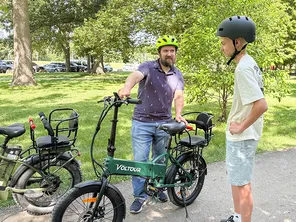
Share the Road & the Trail
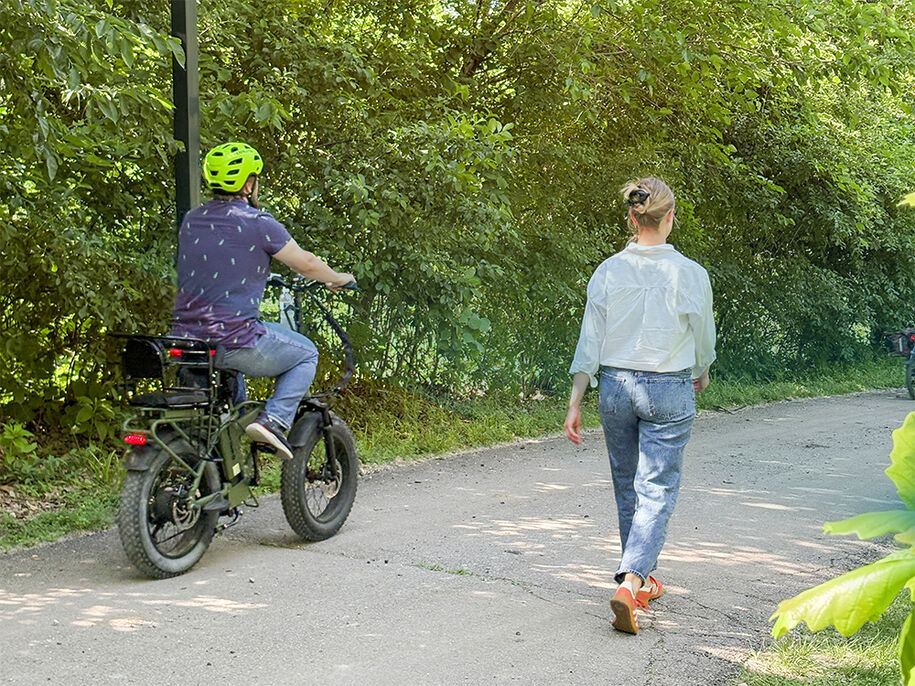
Check local rules before riding. Regulations can vary by park, trail, or community, so look for posted signage or consult park staff.
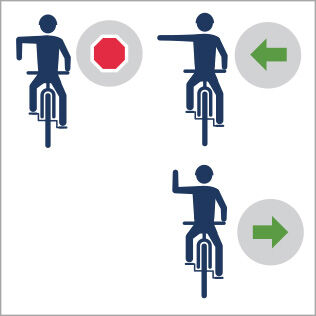
- Obey traffic laws. This includes speed limits, stop signs, and traffic signals. Use an appropriate light at night.
- Signal your intentions: Use your left hand to signal when you plan to turn, change lanes, or stop. Use your voice - “on your left” when needed.
- Speed limit is a maximum. Ride at or below the posted speed and adjust for conditions.
- Be courteous and share the roadway and trail space responsibly.
- Yield appropriately. E-bike riders should typically yield to pedestrians, equestrians, and nonmotorized users.
- Riders: Ride predictably, stay visible, and remember drivers may not always see you right away.
- Motorists: Stay alert and watch for people riding bicycles, e-bikes, and e-scooters.
Always refer to the most current version of the Iowa Code for legal guidance.
E-Bikes (Classes 1-3)
Email Address