
For over 40 years, the Iowa DOT and local farmers have teamed up to make Iowa’s roads safer during the winter. Farmers and landowners understand how snow moves across their land, while the Iowa DOT knows which areas of roadway are most vulnerable to blowing and drifting snow. Together, they form the foundation of our Standing Corn Snow Fence Program.
“Farmers know their land. We know the roads. Together, we can identify the best spots for snow fences and even collaborate on which corn hybrids are most resilient to constant winter winds,” says Craig Bargfrede, our winter operations administrator. This program builds meaningful partnerships that play a crucial role in keeping snow off the roads and making travel safer for everyone in Iowa.
How it Works
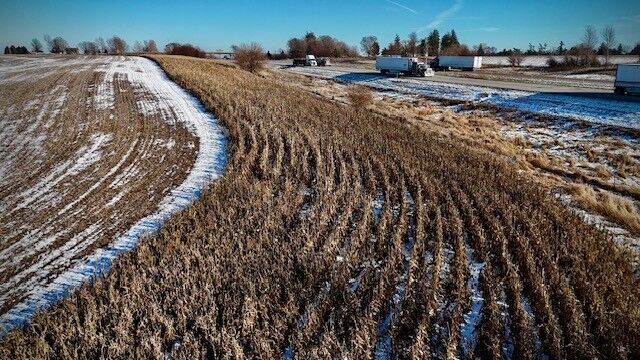
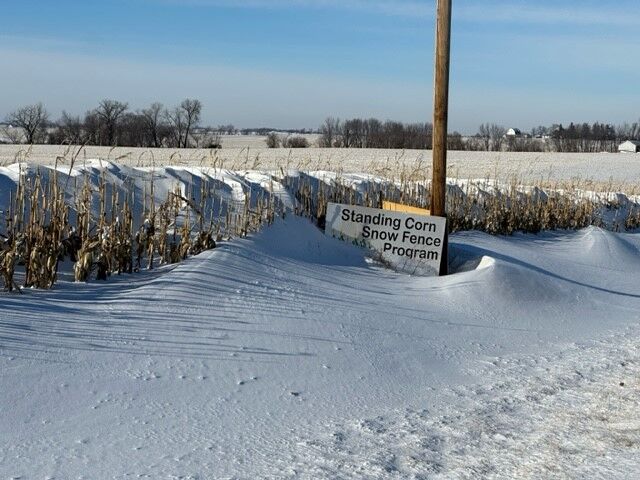
We partner with farmers who have fields along highways, especially in open, flat areas. After harvest, farmers leave between six and 24 rows of corn standing to serve as an effective natural snow fence. The corn slows or even stops snow from blowing and drifting across the highway by trapping it between the stalks. If a farmer can’t or would prefer not to leave rows of standing corn, round hay bales can also be used as an alternative snow fence option.
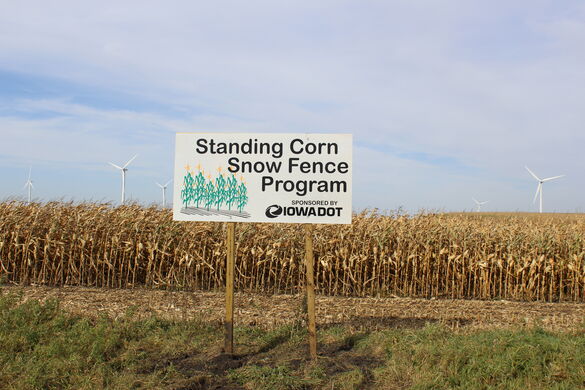
In return, the DOT pays farmers based on the statewide average price per bushel of October new crop corn determined at the close of business on Aug. 1. The DOT then adds an extra $2 per bushel to the statewide price as an incentive to the farmer. This year, that comes out to $6.25 per bushel. For round hay bales, farmers are paid $1 per linear foot.
Is it worth it? Studies say yes. Bargfrede explains, “Studies show that plowing snow costs 100 times more than trapping it with a snow fence, so these partnerships really pay off.”
After winter, farmers can choose how to handle the remaining corn. Some farmers team up with neighbors, sharing equipment to harvest the remaining standing rows and even donating it to local organizations. The benefits of these partnerships can often extend beyond the roads and to the broader community.
Harvesting the Benefits
The ultimate goal of the Standing Corn Snow Fence Program is safety. Standing corn fences reduce blowing and drifting snow, making highways safer for everyone. The DOT saves money on plowing, farmers are compensated for their help, and the public enjoys safer travel. It’s truly a win-win-win. Standing corn fences also bring environmental benefits, such as:
- Wildlife habitat during the cold months
- Improved soil moisture in end rows
- Reduced soil erosion from wind and snow
According to Bargfrede, in fiscal year 2026, the DOT had 139 standing corn and snow fence agreements with Iowa farmers and landowners. These included temporary and permanent snow fences, hay bale fences, and standing corn fences, covering nearly 45.5 miles of fence line. 80 percent of that consisted of standing corn.
We are actively looking for more volunteers to take part in our Standing Corn Snow Fence Program. If you think your property could benefit from taking part in the program, reach out to your local Iowa DOT maintenance garage. Contact information is available on our District Contacts page. We’d love to work with you to help keep Iowa’s roads safer this winter!