
Winter may technically still be weeks away, and the first snowflakes have yet to fall, but in a state where winter weather can change quickly, preparation is essential. Iowa DOT crews have been gearing up for months, inspecting equipment, stocking salt, hiring staff, and making sure we’re ready to keep you moving safely no matter what the season brings.
According to the National Weather Service, this winter we’re looking at a high likelihood of a historic El Niño. This would mean overall above-average temperatures for Iowa. There is less predictability in snow amounts. The El Niño weather pattern could mean above-normal precipitation, but as rain rather than snow. In short, the experts are predicting a warm, wet winter. However, we know Mother Nature in Iowa does its own thing, so here at the DOT, we prepare for everything.
How We’re Preparing
Winter officially started at the DOT on Oct. 15. While Iowans are planning for the holidays, our team is planning for winter: prepping equipment, materials, and staff.
This winter, the DOT will employ around 1,000 permanent maintenance staff and hire up to 633 additional seasonal staff. Interested in joining our winter crew? We’re still hiring! We’re especially looking for additional snowplow operators in our District 2 garages in north and northeast Iowa: Mason City, Hanlontown, West Union, Waukon, and Swea City. Apply at iowadot.gov/careers.
Our winter fleet includes: 921 trucks, 41 tow plows, 50 motor graders, and 10 self-propelled snowblowers (FY26). We also have 52 trucks outfitted with John Deere Path, a road mapping guidance system designed to help our plow operators “see” the road in challenging low-visibility conditions.
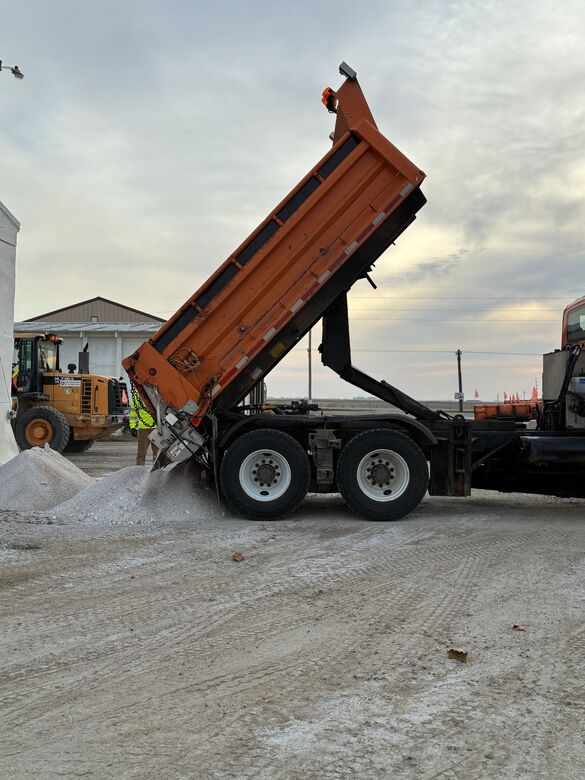
Our mechanics are busy doing detailed checks on each piece of equipment to make sure everything is in tip-top shape and ready to do its job. We also calibrate our salt and sand spreaders to ensure they deposit the correct amount of material on the road. This reduces waste, controls costs, and uses our materials efficiently while making roads safer for everyone.
Last year, the DOT used 112,088 tons of salt and 23.2 million gallons of brine. We use the off-season to replenish and restock our materials for the next season when costs are lower due to lower demand. Heading into winter, we have 268,000 tons of salt in our salt storage facilities and storage capacity for 6.5 million gallons of brine to help maintain safe road conditions on Iowa’s highways and interstates.
What is brine? Brine is a simple solution of rock salt and water. We use brine to pretreat roadways before a storm, preventing snow and ice from sticking to the pavement. As temperatures drop at night, you may see our trucks out spraying brine, even on sunny days. We proactively spray brine on areas prone to frost, like bridges and ramps, to prevent an icy layer from forming, which typically occurs on cold, clear nights.
Winter Construction
While Iowa’s warmer months are known for orange cones and detours, road construction doesn’t stop when the calendar turns and temps start dropping. This year, especially with the predicted warmer weather, several construction projects throughout the state will have continued activity or barriers in place through the winter. Drivers should take extra care and reduce speed in work zones during winter. Be prepared for narrow lanes and shoulders and stay alert for pavement markings that may be harder to see in winter weather.
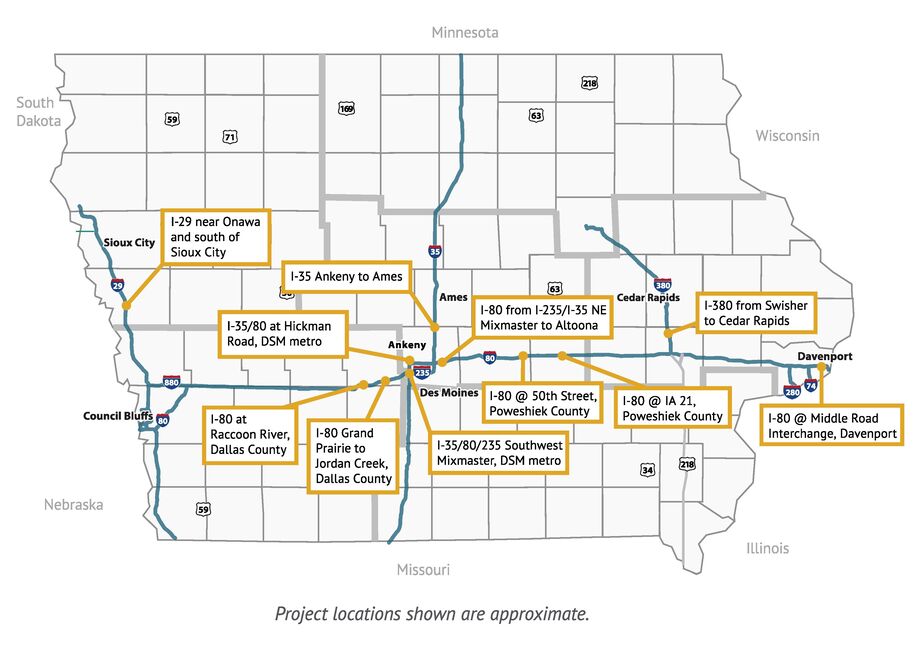
- I-29 near Onawa and south of Sioux City
- I-35 Huxley to Ames
- I-35 / 80 Hickman Road, DSM metro
- I-35 / 80 / 235 Southwest Mixmaster, DSM metro
- I-80 Grand Prairie to Jordan Creek, Dallas County
- I-80 @ Raccoon River, Dallas County
- I-80 NE Mixmaster to Altoona
- I-80 @ IA 21, Poweshiek County
- I-80 @ 50th Street, Poweshiek County
- I-80 @ Middle Road Interchange, Davenport
- I-380 Swisher to Cedar Rapids
How Drivers Can Prepare
- Prepare your vehicle – Get ready for winter conditions to reduce the risk of a breakdown during frigid temps. Make sure your tires are properly inflated and have good tread, and always keep plenty of gas in your tank. It’s also a good time to check your vehicle’s wipers, hoses, battery, alternator, belts, brakes, exhaust system, lights, heater, defroster, and fluid levels.
- Pack your emergency kit - Always keep a few essentials in your vehicle in case of emergency. This kit should contain items to help sustain your and your passengers’ lives if your vehicle becomes stranded in bad weather:
- Water and snacks
- First aid kit including any necessary medication
- Flashlight
- Warm clothing/boots/gloves
- Phone charger
- Jumper cables
- Ice scraper/snow brush
- Brush up on your winter driving. Remember:
- Our plows only travel at 10-40 mph. If you see a snowplow, slow down, and give them space.
- Plows create a large cloud of snow that reduces visibility. There could be a vehicle or other object in the snow cloud that you cannot see.
Know Your Winter Resources
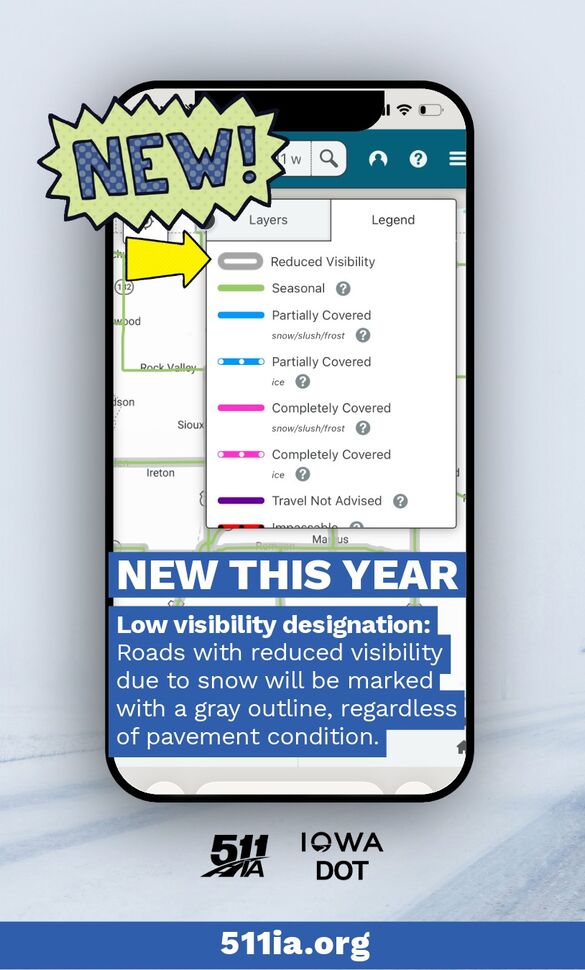
- 511ia.org or the Iowa 511 app for iPhone and Android provides road conditions for Iowa and surrounding states, plow locations, and plow and traffic cameras.
New feature this year! We’ve added a new low-visibility designation to the 511 map. Whenever blowing or falling snow reduces visibility, that road segment will now have a gray outline, regardless of pavement condition. For example, if the road itself is clear and marked “seasonal” (green) but blowing snow makes it hard to see, the map would show the road green with a gray outline.
*Note: This feature is currently only available on the web version of 511 (511ia.org). Watch for it in the 511 app soon.
- Highway Helper provides assistance and response in Des Moines, Council Bluffs, Cedar Rapids/Iowa City, the Quad Cities, and Sioux City. If you’re traveling on Iowa’s interstates and need roadside assistance, dial 911 and ask for Highway Helper.
- National Weather Service at weather.gov or their Facebook page provides weather forecasts and related information.
- Follow Iowa DOT on Facebook, X, or Instagram, and our 511 social media sites for road travel and safety tips like those below.