
Content Information
On this page...
Intercepting ditches are used to more gradually let water down into the roadway ditch. Intercepting ditches consist of two types: permanent and temporary.
Back to topPermanent Intercepting Ditches
Permanent intercepting ditches consist of a dike constructed behind the intercept point of the backslope, see Detail 4101. They are installed to address soil stability problems. The Soils Design Section determines the need for and location of intercepting ditches.
Back to topTemporary Intercepting Ditches
Temporary intercepting ditches consist of longitudinal silt fence placed behind the intercept point of the backslope, see Detail 4102. They are installed for sediment control and are only needed until vegetation has been established. Temporary intercepting ditches will be required only when the length of the backslope is 60 feet or more and 50 feet or more of existing ground slopes toward the backslope, see Figure 1.
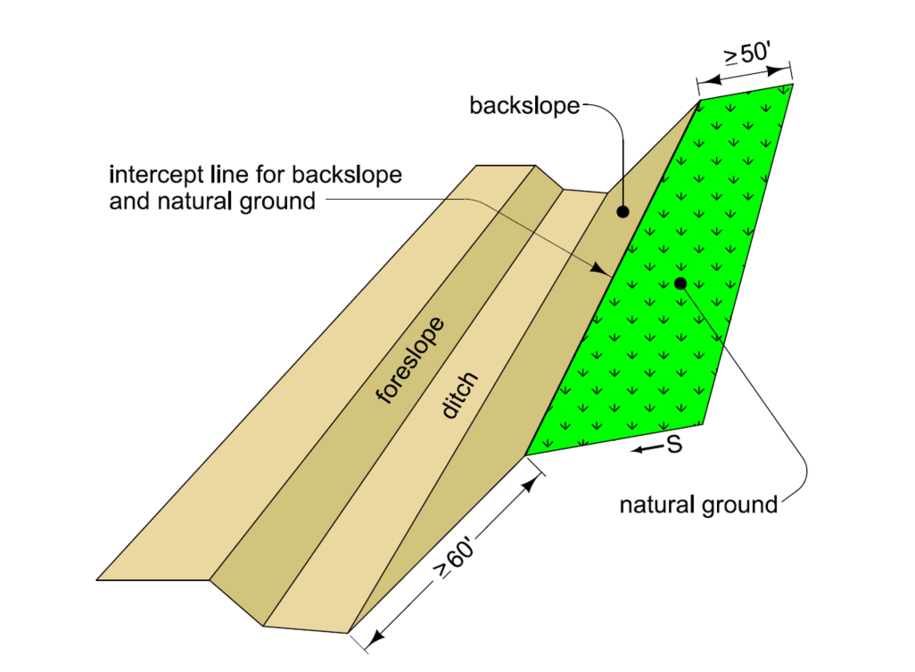
Figure 1: Determining the need for a temporary intercepting ditch.
Rock letdowns will be installed only if a continual erosion problem is identified by the field.
Designers will need to coordinate with the Soils Design Section to ensure permanent and temporary intercepting ditches are not being placed in the same area.
Back to topDetermining Temporary Intercepting Ditch Locations in GEOPAK
To determine temporary ditch locations, first locate areas where the backslope exceeds 60 feet. Copy the intercept line of the backslope with natural ground and move it 50 feet behind the intercept line, see Figure 1. Check the direction of flow. If flow across the natural ground is towards the backslope, place a temporary intercepting ditch.
Back to topRock Flumes for Intercepting Ditches
Rock flumes (see EC-301) are used to let the water down the backslope. Work with the Agronomist to determine locations for rock flumes.
Back to top