
Content Information
On this page...
Preliminary Intake Locations
The primary goal in locating intakes is to limit storm water encroachment onto the pavement so vehicular and pedestrian traffic will not be forced to travel through water. However, intakes also need to be located so they do not interfere with vehicular or pedestrian traffic or utilities.
Preliminary Intake Placement
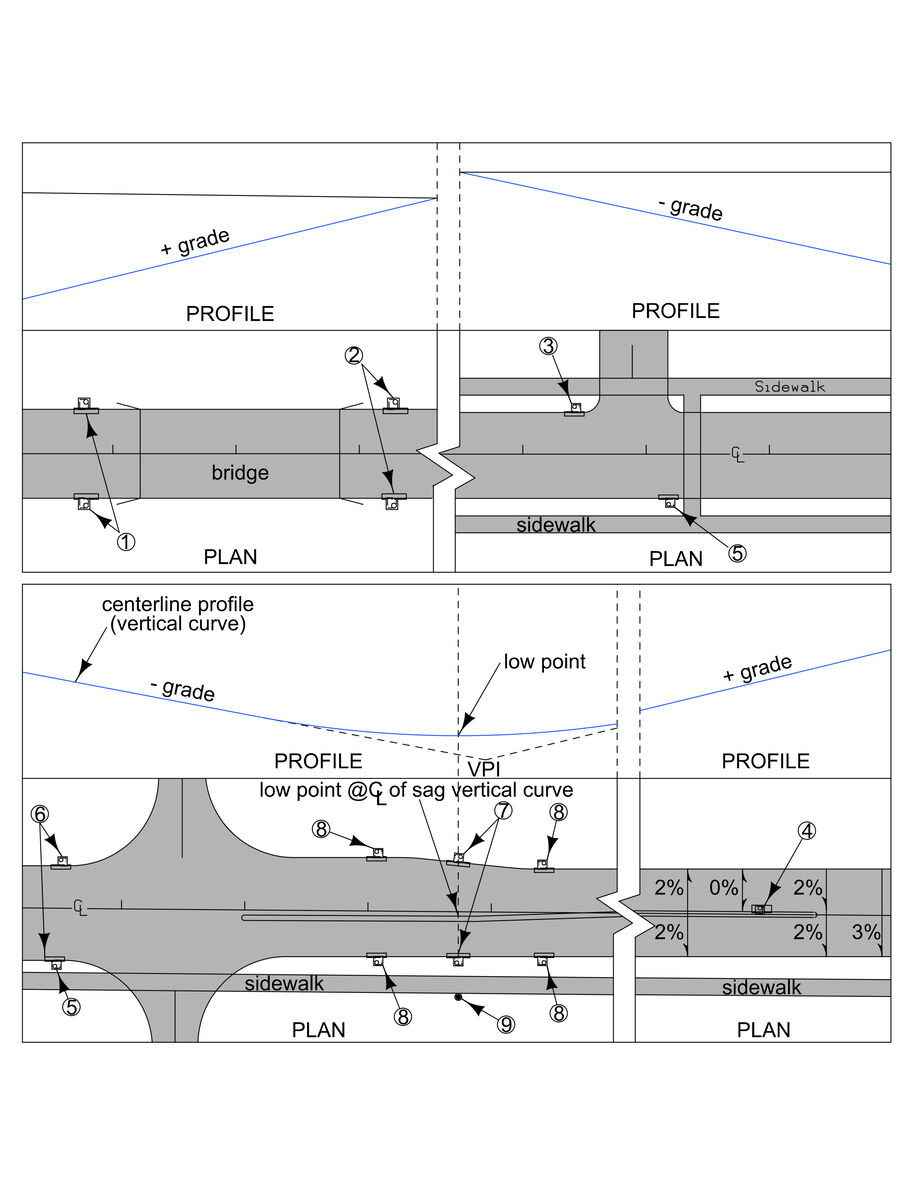
Figure 1 demonstrates areas to consider for preliminary intake placement. They include:
Low points in the gutter grade.
Upstream of crosswalks, intersections, and entrance/exit ramp gore areas.
Upstream and downstream of bridges.
Upgrade of cross slope reversals.
Behind curbs, shoulders, or sidewalks to drain low areas.
Areas to avoid placing intakes include:
Middle of intersections (Refer to Section 4A-3 for “Drainage at Intersections”).
Street returns.
Crosswalks.
On top of existing utilities.
Other Considerations
Storm sewer pipe size restricts spacing between intakes, see Table 1 below. Limit preliminary intake spacing to 400 ft.
Often, unusual situations warrant additional intakes or other drainage devices. The following are guidelines to consider:
Intercept major water flows before they reach pavement. Possible drainage devices to consider include ditches, intakes, and culverts.
Intercept springs, subdrains, and tile lines. Possible drainage devices to consider include ditches and intakes.
Within a project, area intakes may be needed in non-paved areas.
On major highways, interstates, freeways, and other roadways on the National Highway System (NHS), flanking intakes are required on each side of sag intakes. See Section 4A-6 for more information regarding flanking intakes.
After preliminary intake location has been completed, lay out piping between structures
Back to topStorm Sewer Piping
Table 1 provides maximum spacing for intakes and manholes based on pipe size. Maintenance operations may further limit intake and manhole spacing. Maintenance authority limitations should be documented according to Section 4A-2. When laying out preliminary piping, start by assuming a 15 inch pipe diameter.

| Use a minimum 15 inch diameter pipe for all urban storm sewer systems draining the NHS. |
|---|
Refer to the Storm Sewer Design section for additional pipe sizing criteria.
Preliminary Manhole Locations
Manholes are needed in storm sewer systems to allow access for maintenance and cleaning. In order to design the most economic and efficient storm sewer system, tentatively locate manholes where intakes are not required and:
Two or more pipes join together.
Pipe shape or size changes.
Pipe direction changes.
Pipe grade changes.
Pipe elevation changes.
On long tangents where none of the above conditions exist, locate manholes at intermediate points. For maximum spacing, see Table 1 above.
Avoid locating manholes in the following locations:
Over existing utilities.
- In intersections or thru lanes.
In the path of a potential sidewalk or multi-use trail.
If locating a manhole within a roadway cannot be avoided, attempt to place it in the shoulder or median.
Outfall
Stormwater runoff conveyed by piping should be transported to a discharge point to which it would have naturally flowed. Outfall locations should not create or increase erosion or flooding potential downstream. Outfalls may need to be located sufficiently upstream of the right-of-way line or receiving stream to allow for adequate energy dissipation and sediment control.
|
| Do not relocate runoff from one watershed to another without a drainage engineer’s evaluation of hazard and liability. |
|---|
Overland Drainage Swales
Evaluate the need for and location of surface flowage easements and ponding easements for major design storm flows. Surface flowage easements are required to help reduce potential for grading or building within the proposed overland flow drainage system. Surface flowage easement should be obtained all the way to a permanent discharge location. Ponding easements are required where it is known that upstream ponding will occur to reduce the potential for grading or building within the potential ponding area.
|
| Do not relocate runoff from one watershed to another without a drainage engineer’s evaluation of hazard and liability. |
|---|
Detention and Storage
Evaluate the need for detention and storage for interim design sediment control and for final design permanent water quality purposes. Detention and storage could range from designed sediment basins along a project, to detention basins used to reduce peak storm water discharges from a project. Detention basins used for peak discharge reduction generally serve as sediment basins during construction until erosion control is fully established.
Back to topOther Considerations
Other items to consider include, but are not limited to:
Deep cuts.
Utility avoidance.
Traffic control.
Staged drainage design, e.g. a trunk main may be needed on each side of the roadway versus one single one on one side of the roadway.
Concept Plan
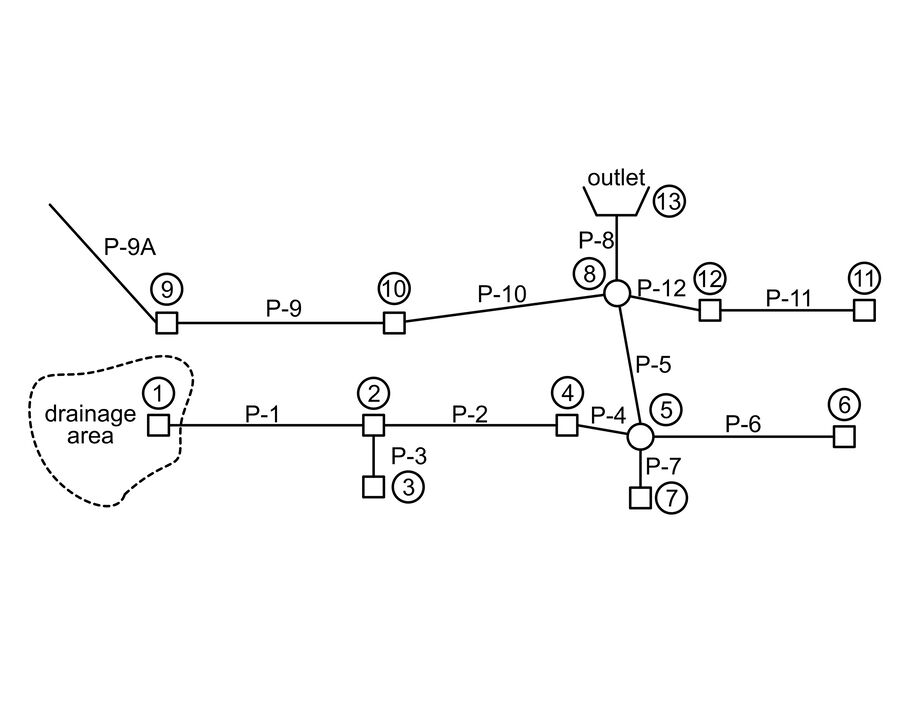
After all intakes and manholes have been tentatively located, number the system to aid in the process of design and construction. Use the following tips when numbering a storm sewer system:
Begin numbering at the upstream end of the drainage system and work downstream.
Number the drainage area the same as the inlet or intake within it. For more on drainage areas, see Section 4A-5.
Once a number is assigned to a drainage area, intake, or manhole it should not change in future revisions.
During the preliminary design, leave extra numbers in order to add structures later (e.g., only use odd numbers).
Number the storm sewer pipe based on the upstream structure it drains.
Off- and on-site pipes and overland point flow sources not associated with another manhole or intake should be numbered with an A, B, C, etc. (e.g., a culvert pipe that drains into an intake).
Back to top