
Content Information
On this page...
The Soils Design Section provides geotechnical engineering services for all phases of planning, design, construction, and maintenance for Iowa DOT bridges, roadways, and other transportation-related structures and facilities. Proper coordination of the Soils Design Events (S1-S4 Events) within the design process reduces lag time between project initiation and project completion. For example, the S3 and S4 Events are typically on differing schedules for drilling, testing, analysis, and reporting/submittals, although some final plan coordination or cross referencing between the S3 submittal and the S4 submittal is commonly necessary in many instances
The Iowa DOT design process flowcharts, see Figures 1 and 2 on pages 3 and 4, provide a general workflow to successfully complete each project. The flowcharts contain a variety of tasks that may be ongoing throughout the project, and/or concurrent with other steps in the project development process. This section presents the Soils Design Events (S1 to S4) with respect to the overall general project development and design process. Soils Design Events are performed at times that range from before the Design Office Concept (D0 Event) to final plan turn-in for roadway, bridge, and/or other projects. Special situations need to be addressed on a project by project basis.
Back to topS1 Event – Preliminary Geotechnical Review for Roadway Projects
The purpose of an S1 Event or work effort is to: 1) review the proposed alignment and grade of a project for potential major soil-related (geologic and geotechnical) problems affecting design, constructability, and performance; and 2) to identify multiple locations or sites as potential borrow sources. When an Environmental Assessment (EA) or Environmental Impact Statement (EIS) is required, the S1 Event is performed in the early stages of project development, typically after the preliminary engineering and environmental study. It is completed prior to the Environmental and Cultural field studies and before the Field Survey (D1 Event), see Figure 1 on page 3. Where an EA or EIS is not required, the S1 Event begins after the Preliminary Design Concept (D0 Event) and is completed before the Field Exam (D2 Event), when the alignment(s) have been set, see Figure 2 on page 4. The S1 Event may occur within the general time frame of some of these events. The S1 Event location within the design process flow chart is shown in Figures 1 and 2 on pages 3 and 4.
Back to topS2 Event – Identification of Additional Soils Related ROW Requirements
The S2 Event work effort includes review of the proposed alignment and grade for a project in order to identify and document all soils-related items affecting ROW. It is accomplished in order to allow for timely acquisition of ROW. This event typically includes final borrow site selection(s) and conceptual borrow design(s), as well as preliminary design and definition of all stability berms, backslope benches, and/or other stability features that require additional ROW acquisition. The S2 Event is performed after the Field Exam Plan Development (D2 Event), and before the ROW submittal (D5 Event). This is typically before receipt of the Final TS&L (B1 Event). Except for bridges, the full drilling program (or at least all that is necessary to accomplish all S2 activities) is normally performed during the S2 study. It needs to cover the roadway alignment and borrow areas, and the structures whose locations have been determined at that point in time. In some cases, a phased investigation program will be required in order to address specific project needs. The S2 Event location within the design process flow chart is shown in Figures 1 and 2 on pages 3 and 4.
Back to topS3 Event – Final Soils Related Items for Roadway Projects
The S3 Event includes all final soils-related work for grading, paving, and grading-related projects including:
- Soils Plan and Profile sheets (Q sheets),
- Subgrade treatment tab,
- Longitudinal subdrain tab,
- Shrinkage tab,
- Summary of Structure Settlement form,
- Settlement plates,
- Incorporation of all stability items (benches, berms, blankets, drains, etc.) onto Q sheets and cross-sections,
- All soils usage information (such as select and unsuitable soils) on final cross-sections,
- Applicable soils tabulations (CS sheets), and
- Everything else soils-related that needs to be performed during the S3 Event.
The S3 Event is performed after the Plans Submitted to ROW (D5 Event) and after completion of the S2 Event. The S3 Event should be completed an estimated 2 months (more if possible) before the Methods Turn-In (DM5 Event) in order to allow time for the design section to incorporate the S3 items into the overall DM5 submittal. The S3 Event location within the design process flow chart is shown in Figures 1 and 2 on pages 3 and 4.

| The S3 and S4 events are typically on differing schedules for drilling, testing, analysis, and reporting/submittals, although some final plan coordination or cross referencing between the S3 submittal and the S4 submittal is commonly necessary in many instances. For example, coordination of soils events is needed when grading work and the structure work are not in the same plans, not tied together during letting, or are not connected otherwise.
|
|---|
S4 Event – Final Soils Related Items for Structures
The S4 Event includes all structure-related soils work including:
Drilling all necessary bridge or structure borings,
All necessary lab testing,
All analysis and all reporting (submittals), which typically includes:
SPS sheets,
Report of Bridge Soundings,
Supplemental Report of Structure Soundings (which includes design information and geotechnical recommendations about Settlement Analysis, Stability Analysis, input/recommendations on type and design of foundation), and
Other items as may be necessary.
Core outs or other types of necessary ground improvements or remediations, and
Other items pertaining to soils-related issues, requirements, or actions.
In some instances, core-outs, remediations, settlement plates, etc. that are identified and designed in the S4 Event need to be carried forward or backwards in to S3 work effort.
The S4 Event is performed after the Final TS&L (B1 Event), and may be performed either before or concurrent with the S3 Event, or in some circumstances, even after some or most of the S3 Event work has been completed. The S4 Event should be completed 12 to 15 months before the Final Bridge Plans (B3 Event) in order to provide sufficient time for the bridge designer to incorporate the S4 information into the bridge plans. The S4 Event location within the design process flow chart is shown in Figures 1 and 2.
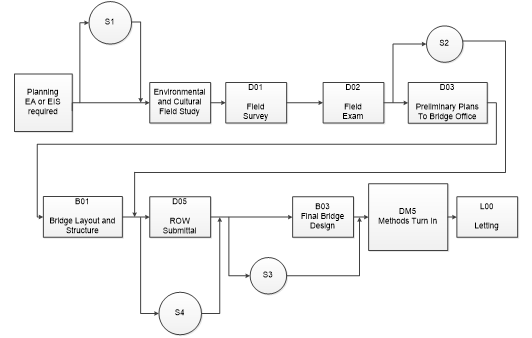
Figure 1: Typical design process flow chart for Soils Design Events with Environmental Assessment (EA) or Environmental Impact Statement (EIS).
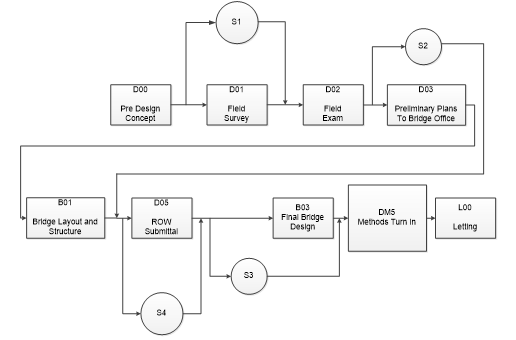
Figure 2: Typical design process flow chart for Soils Design Events without Environmental Assessment (EA) or Environmental Impact Statement (EIS).