
Content Information
On this page...
Treatment of old roadbeds depends on future use of the land. If a road has been abandoned and is to be converted to farmland, the roadbed must be obliterated. If new construction follows the alignment of, or intersects with, an existing road, the existing roadbed is either rebuilt or obliterated. This section discusses each of these situations. Contact the Soils Design Section for assistance.
Back to topPavement Removal
EPA requirements prohibit burying HMA material in embankments; therefore, when a new roadbed will cover or partially cover an existing roadbed, HMA pavement must always be removed. Include this in the pavement removal quantities. Designers should assume PCC pavement will be removed (for plowing and shaping, PCC pavement must be removed). Include this in the pavement removal quantities.
Section 2510 of the Standard Specifications provides guidance to contractors regarding pavement removal. When the project concept includes pavement removal and reprocessing, provide for one of the following:
- Remove and stockpile.
- Remove, mill and/or crush, and use in project.
- Remove, mill and/or crush, and stockpile.
If crushing is specified, identify the gradation requirement and intended purpose (i.e., Special Backfill or Modified Subbase). Pavement removal and milling and/or crushing should be included on one contract.
Back to topConversion to Farmland
When an old roadbed is to be converted to farmland, it must be obliterated. Road Design Detail 4302 provides information regarding obliteration of existing roadbeds. Obliteration of the roadbed and conversion to farmland must not disturb current drainage patterns. Refer to Section 10A-1 for information regarding topsoiling.
Back to topNew Highway Construction
Two situations that designers encounter involve:
New construction that generally follows the alignment of an existing road, or
New construction transverse to an existing road, e.g. mainline construction that intersects an existing road.
Often, these situations involve plowing and shaping the existing roadbed. This is done when new pavement will be placed over an area consisting partially of new fill and partially of old fill. Plowing and shaping provides for a more uniform support for the new pavement. Standard Road Plan EW-101 shows how this area is determined. D is a minimum of 5 feet.
Following the Alignment of an Existing Road
Two cases are considered when proposed new highway construction generally follows the alignment of an existing road. In some situations, the existing roadbed is outside of the area for which plowing and shaping is required. In these cases, the existing roadbed may be left in place as is. Contact the Soils Design Section.
Case 1
Where the existing road would be located within the proposed roadbed (see Figure 1), the embankment should be rebuilt according to Standard Road Plan EW-101. Tab 107-31 should be included in the plans.
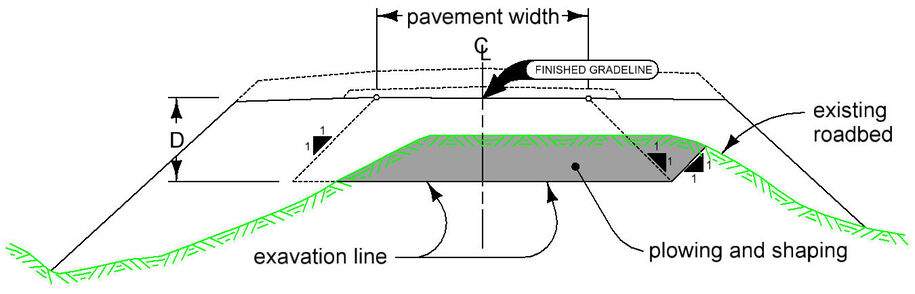
Figure 1: Existing roadbed inside of proposed roadbed as outlined in Case 1.
Case 2
Where the existing roadbed would be partially or fully exposed, the roadbed should be obliterated and reshaped (see Figure 2) or covered over with a minimum of one foot of fill (see Figure 3), whichever method is appropriate to the conditions involved.
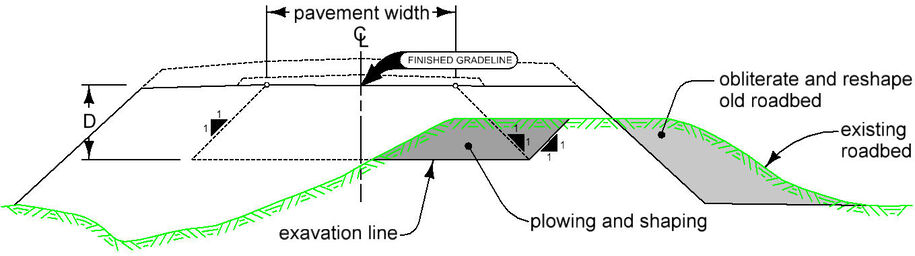
Figure 2: Reshaping roadbed as outlined in Case 2.
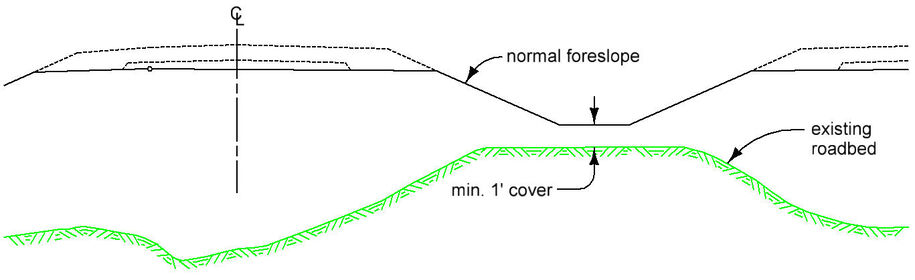
Figure 3: Covering old roadbed as outlined in Case 2.
Transverse to an Existing Road
When widening or adding lanes through an intersection with an existing road (see Figure 4), excavation through the area of the existing transverse roadbed should be tabbed as plowing and shaping. Use Tabulation 107-31
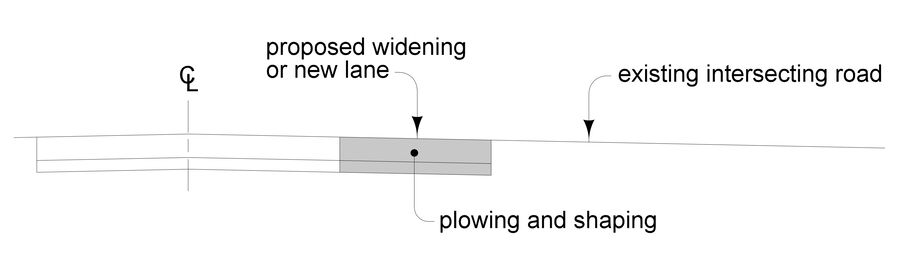
Figure 4: Widening or adding lanes through an intersection.
If the existing road is to be converted to farmland, follow the procedure discussed above for conversion to farmland, except the existing roadbed located under the proposed new roadbed should be tabbed as plowing and shaping rather than obliteration (see Figure 5). Use Tabulation 107-31
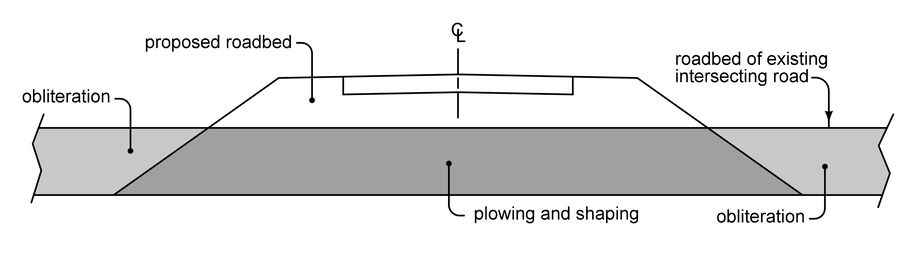
Figure 5: Existing transverse road inside of proposed roadbed.
Back to top