
Content Information
On this page...
Introduction
The safety edge is a beveled pavement edge to help lessen the severity of roadway departures. When a driver drifts off the paved surface, the safety edge provides greater ease re-entering the roadway, and reduces the risk of over steering and loss of control of the vehicle.
Back to topWhere to Use
Safety edge is required on all primary highways unless one of the following conditions is met:
The roadway is an interchange ramp or loop,
The roadway or shoulder is curbed, or
The paved shoulder width is 4 foot or greater.
Generally, these criteria will limit the number and types of projects that need safety edge. Most likely, the projects that will need safety edge will be two lane rural highways without paved shoulders. These projects could be either new construction or rehabilitation.
Back to topCross Sectional Design
The angle of the bevel is critical for the safety edge to function properly. Measured from level, the bevel is 30 degrees with an equivalent run to rise ratio of 10½ to 6.
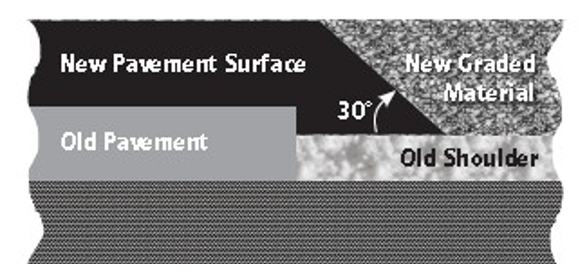
Figure 1: General safety edge detail from FHWA.
The 30 degree angle does not account for surface slope. Existing surface slopes range from 2 to 8 percent, which add an additional 1.1 to 4.6 degrees to the bevel angle when measured from level. The resultant angle is within the 30 to 35 degree recommendation from FHWA.
Back to topPCC Paving and Overlays
For PCC pavements with safety edge, refer to PV-3 for details.
On the primary highway system, there are no cases where PCC paving is less than 7 inches thick.
Back to topHMA Paving and Overlays
For HMA pavements with safety edge, refer to PV-3 for details. These details prescribe a 30 degree safety edge beginning at the edge of the original pavement width for the full depth of the paving.
Back to topPlan Details
Show the safety edge on the appropriate roadway typical when it is required.
Without any additional paved shoulder, a roadway with 12 foot lanes will need the safety edge.
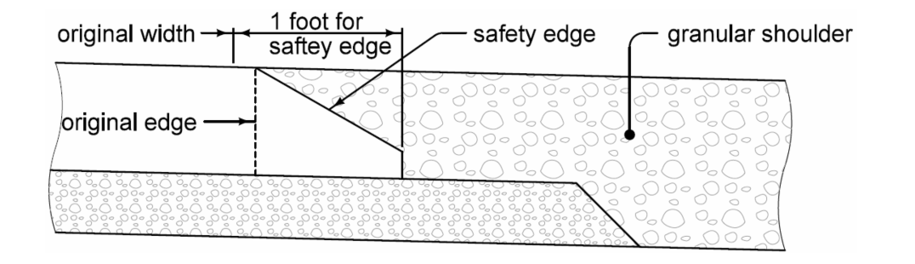
Figure 2: Addition of safety edge to a 12 foot PCC Lane.
For PCC pavement, the additional width for the safety edge is included in the paving area computation.
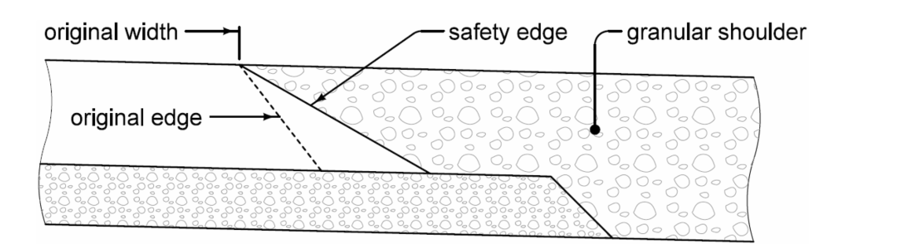
Figure 3: Addition of safety edge to a 12 foot HMA Lane.
For HMA pavement, the additional quantity for the safety edge is included in the tonnage computation.
Alternately, when resurfacing an existing roadway that has granular shoulders or paved shoulders less than 4 feet, a safety edge is constructed as shown in Figures 5 and 6. The safety edge may also be used when the paved shoulder width is 4 foot or more to provide a better construction sequence for the contractor.
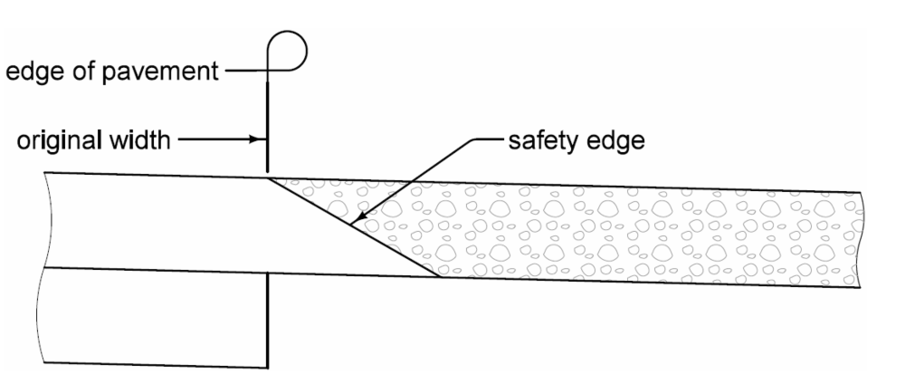
Figure 4: Resurfacing Project without base widening.
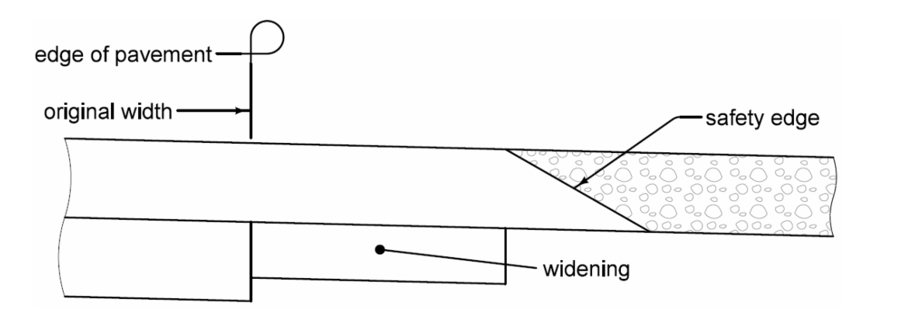
Figure 5: Resurfacing Project with base widening.
As shown in Figure 6, the safety edge is not required on widening units placed with or prior to a resurfacing project. However, the width of the base widening should be maintained on the surface of the overlay.

| It is acceptable to overhang the safety edge onto the existing shoulder, provided it is stable condition. In areas where the shoulders are soft or problematic, support the safety edge with a widening unit to ensure the edge will not deteriorate
|
|---|
Include Standard Road Plan PV-3 in the Index of Standard Road Plans tabulation.
Refer to Standard Road Plan PV-3 for areas around intersections and interchanges that are not required to have safety edge.
Back to top