
Content Information
On this page...
Normal Shoulder Cross Slope
All shoulders should slope away from the roadway, except in a limited number of situations. The shoulder cross slope should be sufficient to rapidly drain water or snow melt away from the pavement surface, but not cause adverse effects to vehicle operation.
The type of shoulder has bearing on the cross slope. Refer to Section 1C-1 for the acceptable ranges of and preferred values for shoulder cross slopes.
Back to topShoulders with Curbs
Shoulders with curbs are treated the same as those without.
Back to topShoulders on the Interstate
The cross slope of the shoulder should not be less than the cross slope of the adjacent lane. The exception is shoulders in superelevated roadways, as is discussed later in this section.
Some interstates are designed with the intent that the shoulder will provide for future capacity improvement and/or act as traffic lanes to maintain traffic during construction. In these situations, design the shoulder cross slopes and transitions to meet traffic lane requirements.
Back to topShoulders Designed to Accommodate Bicycles
In areas where a portion of the shoulder is paved to accommodate bicycles, the District, in conjunction with the designer, must determine the shared use path category with which the segment of roadway will comply. The cross slope must meet the requirements of the selected category defined in Section 12B-02.
The cross slope of shoulders in superelevated curves should be treated as addressed below. Designers must be aware that this may yield cross slopes which do not comply with Section 12B-02. If this occurs, the design should be amended to comply, or the exceptions documented.
Back to topShoulder Slope Transitions
In some locations, for example bridge approaches and exit gores, the shoulder cross slope will need to transition from the normal cross slope. These transitions should be detailed within the plan. The maximum rate of change should be 1% in 12.5 ft. If the shoulder is anticipated to serve as a traffic lane in the future, the transition rate should be obtained from Section 2A-3. For example, a 24 foot roadway with a design speed of 65 mph has an x value of 84 feet (Table 5 in Section 2A-3). This results in a rate of change of 1% in 42 ft.
Bridge Approaches
Bridges and the double reinforced section of the bridge approach section are typically built without a crown break at the shoulder line. The designer should transition the cross slope of the shoulders to match the bridge cross slope in the area outside of the bridge approach area.
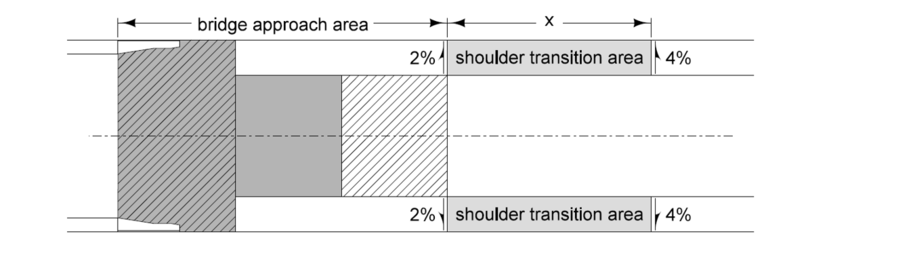
Figure 1: Shoulder transition at bridges.
Back to topGore Areas (PV-400 series and Design Details 533 series)
Typically exit gores are pitched at 3% and entrance gores are pitched a 4%. Transitions for high side shoulders of ramps at gore areas will be longer than ramp transitions since the ramp shoulder slope needs to transition to pitch the opposite direction of the ramp.
Exit Gores (PV-410, PV-412, 533-1, 533-4)
Shoulders with a normal cross slope of 4% will need to be transitioned to 3% in areas adjacent to ramp tapers. The areas abutting the shoulders, such as the gore nose, are sloped at 3%; therefore, the mainline shoulder should transition from 3% to 4% and the ramp shoulder from 3% to 4%, but pitching the opposite direction, see Figure 2.
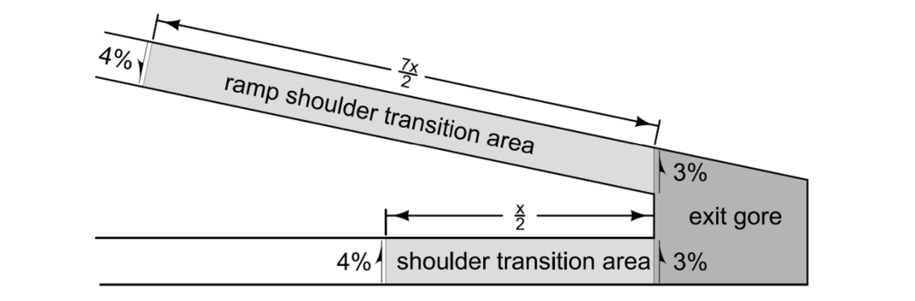
Figure 2: Shoulder transitions at exit gores.
Entrance Gores (PV-411, PV-414, 533-2, and 533-5)
The cross slope of the ramp is 5.4%; therefore, the cross slope of the shoulder is 2.6% at the start of the shoulder transition (8% maximum breakover – 5.4% ramp cross slope = 2.6%). This means the ramp shoulder needs to transition 6.6% to match the 4% cross slope of the gore area, see Figure 3.
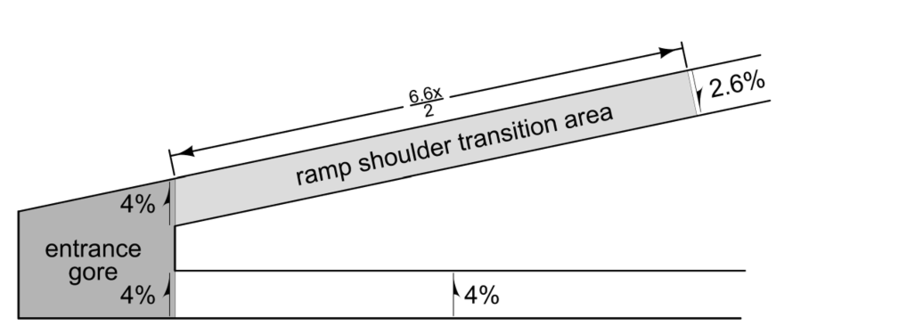
Figure 3: Shoulder transitions at entrance gores.
A horizontal curve on the mainline located near a gore area may influence mainline and ramp shoulder transitions depending on how the curve increases or decreases shoulder slope near the gore area.
Back to top
Shoulders on Superelevated Roadways
The cross slope break between the shoulder and pavement surface should be limited to an algebraic difference of 8%.
Low Side Shoulders
Shoulders on the low side of superelevated roadways should slope away from the roadway. The normal cross slope of the shoulder should be maintained until the cross slope of the roadway exceeds the normal shoulder cross slope. The transition of the shoulder cross slope should equal the transition rate of the roadway.
For example, if the mainline pavement is superelevated at 5%, the low side shoulder would slope away at 5%. The shoulder cross slope transition would begin where the mainline pavement cross slope equals the normal cross slope of the shoulder and transition at an equivalent superelevation transition rate.
High Side Shoulders
Shoulders on the high side of superelevated curves should slope away from the roadway. The normal cross slope of the shoulder should be maintained until the algebraic difference between the cross slope of the shoulder and the cross slope of the roadway reaches 8%. Once the algebraic difference in cross slope reaches 8%, the shoulder cross slope should transition up at an equivalent transition rate as the adjacent roadway to maintain the 8% algebraic difference. For example, if the mainline pavement is superelevated at 6%, the high side shoulder should slope away at 2%.
If the superelevation rate exceeds 7%, maintain a 1% shoulder cross slope away from the adjacent pavement. For example, if the mainline pavement is superelevated at 8%, the high side shoulder should slope away at 1%.
PV-300 Series Standard Road Plans
Refer to the PV-300 series for details of shoulder transition in superelevated roadways.
Back to top