
Content Information
On this page...
This section discusses the design considerations involved with median crossings. There are three types of median crossings: median openings, median turnarounds, and median crossovers. This section will discuss median openings and median turnarounds in more detail, whereas median crossovers are discussed in more detail in Section 3E-3 of this manual. Section 3E-1 provides an explanation of the four different types of medians. This section applies to only raised and depressed medians.
Back to topMedian Openings
Divided highways with at-grade intersections require median openings at various locations, such as public-road connections and points of private access. The design of openings should be based on traffic volumes, types of turning vehicles, and the requirements outlined in Section 112.9(4) of the Iowa Administrative Code. The Iowa Primary Road Access Management Policy provides design guidance for complying with the administrative code.
Refer to Section 3K-2 for information regarding urban entrance designs.
According to the Iowa Primary Road Access Management Policy, the width of a median opening should be at least 40 feet. The slope of the crossing, when measured perpendicular to the mainline, should be 3%, or up to 5% in areas containing superelevated curves or differential grades. The shape of median ends at the opening may be circular or bullet-nose. The shape normally depends on the effective median width at the end of the opening.
See AASHTO’s A Policy on Geometric Design of Highways and Streets for details on the design and use of median ends. Iowa DOT uses a WB-67 design vehicle for median openings.
Raised Medians
All median openings within raised medians should be paved. The need for left-turn storage lanes should be determined on each project or location based upon median width, type of side road or access, and turning traffic volumes. See AASHTO’s A Policy on Geometric Design of Highways and Streets.
Depressed Medians
Public-Road Connections
Median openings within depressed medians at public-road connections should be paved and include left-turn lanes regardless of the side road’s surface type, see Figure 1. Refer to Section 6C-5 of this manual for more information on warrants and design of left-turn lanes for expressways. Public road connections are generally defined as side roads owned and maintained by a public entity. They include state routes, county roads, city streets, frontage roads, and all park and institutional roads. Where adjoining public roads have been designated but not developed, the median opening should be constructed but not paved and should include grading for left turn lanes.
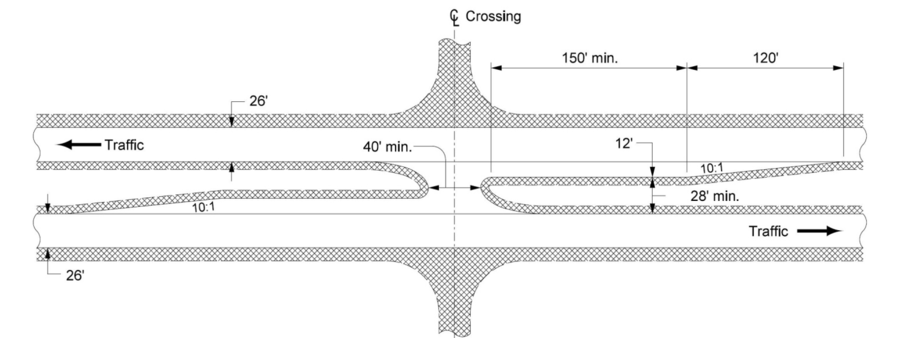
Figure 1: Paved surfaced depressed median opening (Side Road).
Points of Private Access
For private points of access the median opening surfacing is designated by the surfacing of the access. Median openings at field entrances should normally be surfaced with granular material. Openings at points of private access should normally be designed without left-turn storage lanes and in no case should an unpaved opening be designed with a left-turn storage lane.
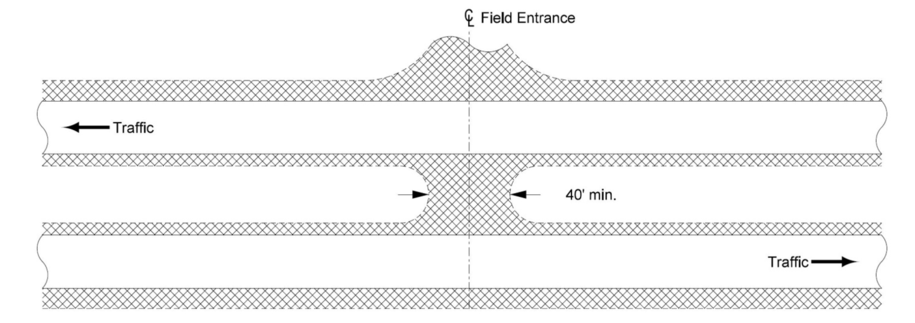
Figure 2: Granular surfaced depressed median opening (Field Entrance).
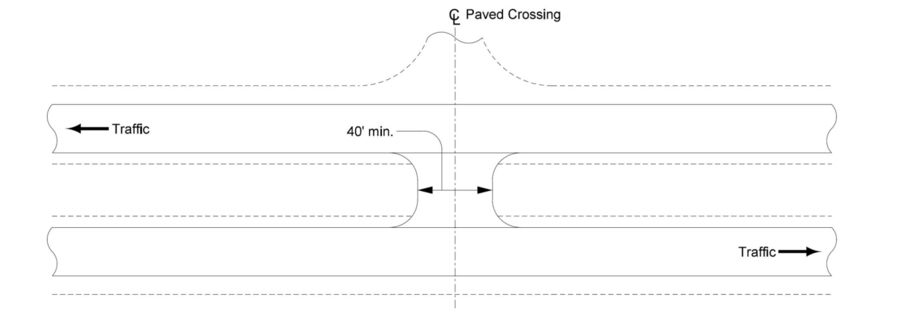
Figure 3: Paved surfaced depressed median opening (Paved Entrance).
Back to topMedian Turnarounds
Median turnarounds, see Figure 4, are provided at selected locations on divided highways for crossing by authorized vehicles only. Unlike median openings, median turnarounds are not located at at-grade intersections. Two general categories of vehicles use median turnarounds: governmental services vehicles (maintenance, traffic services, and emergency) and law enforcement vehicles. Median turnarounds should be designed with these vehicles in mind
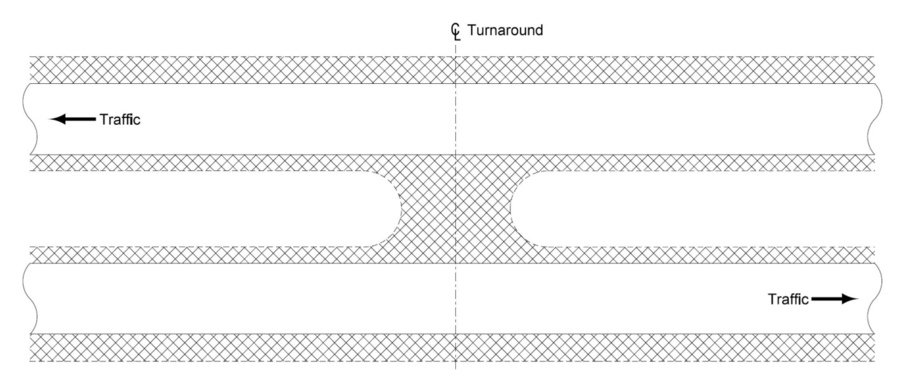
Figure 4: Granular median turnaround (facility without full width paved shoulders).
Other design considerations include:
- Avoid locations within 1,500 ft of any structure or ramp taper.
- Locate in areas where adequate stopping and departure sight distance exists. It is best to use conservative values for stopping sight distance.
- Avoid locations within superelevated curves.
- Choose a turnaround width and radii that are adequate for all authorized user vehicles. Ideally, the median width at the selected location will allow the design vehicle to complete a U-turn maneuver without backing up.
- Use a granular surface.
- However, on facilities with full width paved shoulders median turnarounds should be paved.
- In no case should curbs or pavement markings be used in a depressed median turnaround.
- If 10:1 side slopes do not all ready exist at the turnaround site, grade the transverse slopes according to Section 3F-3.
Back to top