
Content Information
On this page...
For each project, include the Project Design Criteria worksheet (Section 1C-1) and the Decision Log in the project file, as well as the written documentation defined below.
Back to topVariance from the Department’s Guidelines
The design criteria worksheets in Section 1C-1 show preferred values based upon departmental decisions and acceptable values that conform to criteria listed in AASHTO documents. The Bureau Director or ADE responsible for the design may approve variances from the criteria worksheets, provided they are appropriate and meet the documentation requirements. For these situations, the Designer responsible for the design should send an email to the Bureau Director or ADE explaining the variance and why it is necessary.

| Documenting variances is necessary to track Departmental decisions and to document project constraints that influenced the design. |
|---|
Variance from Controlling FHWA Standards
On NHS projects, federal law requires formal design exceptions when certain design guidelines are not met. These design guidelines can be found in the Code of Federal Regulations (23 CFR Sec 625.4) and are listed in Table 1 of Section 1C-1. These values are highlighted in the design criteria worksheets in Section 1C-1. Table 1 in Section 1C-1 explains the highlighting used. The key documents impacting design of “Roadway and Appurtenances” are:
- A Policy on Design Standards Interstate System.
- 3R Agreement.
- A Policy on Geometric Design of Highways and Streets.
- Erosion and Sediment Control on Highway Construction Projects (23 CFR 650, subpart B).
- Location and Hydraulic Design of Encroachments on Flood Plains (23 CFR 650, subpart A).
- Procedures for Abatement of Highway Traffic Noise and Construction Noise (23 CFR 772).
- Accommodation of Utilities (23 CFR 645, subpart B).
- Pavement Policy (23 CFR 626).
Pedestrian and Bicycle Accommodations and Projects (23 CFR 652)
|
| Formal design exceptions for variances from the 10 controlling criteria listed in Table 1 of Section 1C-1 are required on NHS routes only. On other routes, follow the Variance from Department's Guidelines above. Design speed and design loading structural capacity have significant impacts on operational performance of a roadway (design speed affects many components of road design and structure failure can lead to a road closure). Therefore, strong support will be needed for design exceptions for these two criteria. Designers should first give consideration to other alternatives. Formal design exceptions require NEPA clearance. Design exceptions should be identified early in the development of project to avoid the project being delayed. Designers need to contact the NEPA Coordinator and Location Engineer in the Location and Environment Bureau when a design exception is identified. |
|---|
The key documents impacting design of “Bridges and Structures” are:
- Standard Specifications for Highway Bridges, AASHTO.
- AASHTO LRFD Bridge Design Specifications, AASHTO.
- Standard Specifications for Movable Highway Bridges, AASHTO.
- Bridge Welding Code, ANSI/AASHTO/AWS D1.5, AASHTO.
- Structural Welding Code--Reinforcing Steel, ANSI/AWS D1.4.
- AASHTO Standard Specifications for Structural Supports for Highway Signs, Luminaries, and Traffic Signals, AASHTO.
- Navigational Clearances for Bridges, refer to 23 CFR part 650, subpart H.
Pedestrian and Bicycle Accommodation
The Bicycle and Pedestrian Long-Range Plan provides information regarding bicycle and pedestrian accommodation. Chapter 6 (Complete Streets Policy) provides conditions for which the provision of bicycle and pedestrian facilities is not required. If bicycle and pedestrian facilities will not be provided, document the reasons and include in the project folder.
Back to topWriting Design Exceptions
Include the following information when writing a design exception.
Existing Roadway Characteristics
Include a brief description of the project. Identify the route, location, functional classification, current and design year ADT, percent trucks, and all other basic project information that is relevant for evaluating the design exception. Note that the design meets minimums and maximums for the type of project and for the classification of the highway, except as indicated in the specific design criteria not met.
Specific Design Criteria Not Met
Identify and describe the design element(s) that do not meet the recommended design criteria. State what the minimum or maximum value is and the resource from which that information was obtained. Include the specific location(s), limits, or length of the alternate design element. If it will help the reviewer better understand the design exception, a profile view, a drawing, an aerial photo, or similar information may be included in the design exception. Clearly explain why the design exception is necessary.
Alternatives Considered
Discuss practical alternatives along with associated costs. Consider these alternatives prior to requesting an exception. If none of the alternatives are chosen, provide sufficient information on costs versus benefits, right of way and environmental impacts, and any other factors to explain why.
Comparison of Safety and Operational Performance
Include information that supports the decision to propose the design exception. This may include cost information, crash data analysis, a benefit/cost analysis, or a discussion of consequences associated with bringing the design up to the recommended design criteria. Resources such as the Highway Safety Manual or Highway Capacity Manual may be used to examine the safety and operational performance effects of the design exception.
Generally, a crash data analysis is performed to determine the impact of the design elements on safety. Usually the latest 5 years of available crash data are evaluated. During the evaluation, look beyond the numbers and, at a minimum, examine the specific types of crashes (run-off-the road, rear-end, sideswipe, head-on, etc.). Examine what affect the design exception may have on specific types of crashes. Crashes that would not have been impacted by the proposed improvement may be eliminated from the analysis. Animal in the roadway crashes are commonly eliminated from analysis. If crash data is not available, examine data from routes with similar features.
A cost analysis can be performed to determine the costs required to achieve the suggested minimums or maximums. Use the total project cost. Additional costs could include items such as additional grading or paving, updating or replacing structures, acquiring additional right of way, wetland mitigation, etc. An updated Summary of Costs per mile of Road Construction can be obtained from the Pre-Design Section to assist with the cost analysis.
Once the crash data and the correction costs have been compiled, a benefit to cost (B/C) analysis can be performed. This involves comparing the safety benefit of correcting the deficiency to the cost of the corrections. A spreadsheet has been developed to determine the benefit to cost ratio and can be obtained from the Traffic and Safety Internet page at https://iowadot.gov/traffic/Traffic-and-Safety-programs/TSIP/TSIP-Program. The updated loss reduction values for spot locations and rural sections used in the B\C analysis can be obtained from the Traffic and Safety Internet page at https://iowadot.gov/traffic/Traffic-and-Safety-programs/TSIP/TSIP-Program. If different types of alternate design elements have been identified on a project, a separate B/C analysis should be developed for each.
Proposed Mitigation Measures
Describe any measures that considered for mitigating the potential adverse impacts of the design exception. Identify any mitigating measures that will be taken.
A list of possible mitigation strategies is included in Chapter 4 of Mitigation Strategies for Design Exceptions at http://safety.fhwa.dot.gov/geometric/pubs/mitigationstrategies/index.htm
Compatibility with Adjacent Sections
Discuss possible effects the design exception may have on the safety and operational performance of adjacent roadway sections. For example, if a design exception is being proposed for a curve, examine the effects this will have on sections connecting to the curve. Consider Figure 1 below. Design exceptions for reduced radii may be acceptable for curves 2 and 3 since they are both located between curves. Design exceptions for reduced radii for curves 1 and 4 may be less desirable since they are located at the end of long tangents, where drivers are more likely to run off the road.
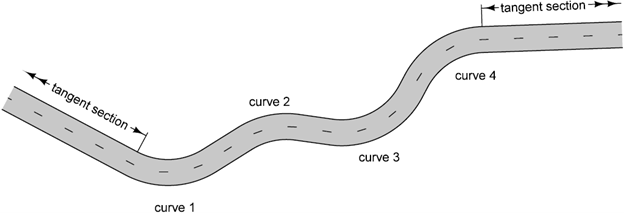
Figure 1: Example of compatibility with adjacent sections.
Back to topConclusion/Recommendation
Clearly state a recommendation. Include a brief summary of the information that supports the recommendation chosen.
Back to topSignature Lines
Include signature and datelines for all those required to approve the design exception. All projects will require approval of the office director of the office completing the design and the Director of the Design Bureau. For non-Interstate projects, the District Engineer’s approval is also required. Interstate projects require approval from the FHWA Program Delivery Team Leader.
Back to topSubmitting a Design Exception
Submit design exceptions for approval as early as possible in the design process—first to the District Engineer, then to the Director of the bureau responsible for the design, the Director of the Design Bureau, and lastly to FHWA if required. Thoroughly document design exceptions and include in the project file.
Back to topDesign Exception Example
Design Exception for Reduced Shoulder Widths (298.14 KB) .pdf
Back to topChronology of Changes
Back to top