
Content Information
On this page...
Grading Typicals G_4D_Grade_Delay and/or G_4D_Grade_Delay_S should be included in the plans for four lane divided projects that are graded and paved in separate years. G_4D_Grade_Delay and the select option on Typical G_4D_Grade_Delay_S show the initial subgrade cross section consisting of a 2% slope to each side. However, the final subgrade cross sections consist of a 1% slope to one side and a 4% slope to the other side, see Figure 1.

Figure 1: Final subgrade cross section.
For projects that are graded one year and paved the next, water may not drain off the 1% graded surface prior to paving. Water infiltration then creates a wet subgrade. Prior to paving in the following year, the soil in these areas has to be reworked to dry it out and then recompacted. In some cases, the soil has to be replaced and then recompacted. To prevent this problem, the subgrade cross sections in the first year are graded to a temporary 2% slope in both directions, see Figure 2.
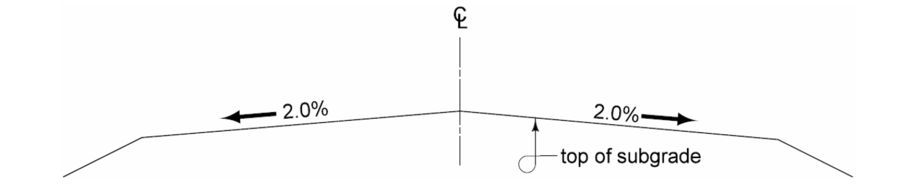
Figure 2: Temporary subgrade cross section.
Prior to paving in the following year, the subgrade is trimmed to the final 1%–4% cross section, see Figure 3.
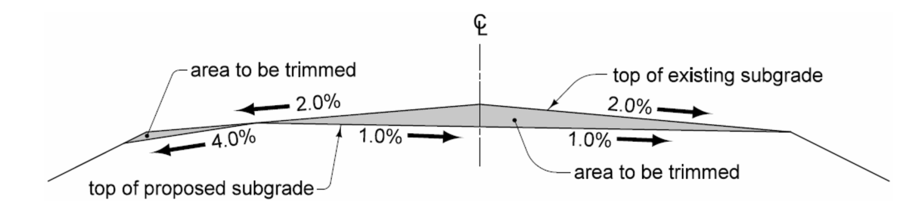
Figure 3: Temporary subgrade is trimmed before paving.
Keep in mind that when subgrade treatment (select soil is assumed) is required, approximately 6 inches of the treatment material will be removed at the centerline when trimming from 2%–2% to 1%–4%. For example, if a minimum of 2 feet of treatment is required, 2.5 feet of treatment will need to be placed to account for the 6 inches of material removed, see Figure 4.
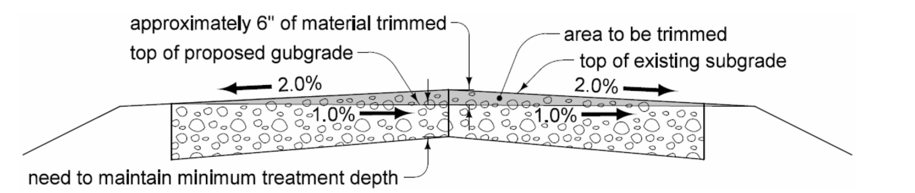
Figure 4: Accounting for trimmed subgrade treatment material.
The trimmed material is used as earth shoulder fill and should be included in excavation required for Earth Shoulder Construction. Add a note in the Estimate Reference Information that indicates the volume for Earth Shoulder Construction that is available from this trimmed material.
Typical 2101 should be included in the paving plans.
Back to top