
Content Information
On this page...
These processes are based on the procedures used in FHWA’s Urban Drainage Design Manual, Hydraulic Engineering Circular No. 22.
Back to topIntercepted Flow
Intercepted flow is flow intercepted by an intake under a given set of conditions. The interception capacity of an open-throat curb intake is equal to the efficiency of the intake multiplied by the total gutter flow. The general equation relating efficiency to intercepted flow is:
\(Q_i= EQ\) (Equation 4A-7_1)
where:
\(Q_i\)= Intercepted flow, \(ft^3\)/s.
E = Intake efficiency.
Q = Design gutter flow, \(ft^3\)/s.
Back to topBypass Flow
Bypass flow is flow bypassing an intake. The general equation relating bypass to intercepted flow is:
\(Q_b= Q-Q_i\) (Equation 4A-7_2)
Where,
\(Q_b\)= Bypass flow, \(ft^3/s\)
\(Q_i\)= Intercepted flow, \(ft^3/s\)
\(Q\)= Design gutter flow, \(ft^3/s\)
Back to topEfficiency of Open-throat Intakes on a Continuous Grade
Efficiency is the percent of total flow that the intake will intercept under a given set of conditions. Efficiency changes with changes in inlet geometry and pavement cross slope, longitudinal slope, and roughness, as well as total gutter flow.
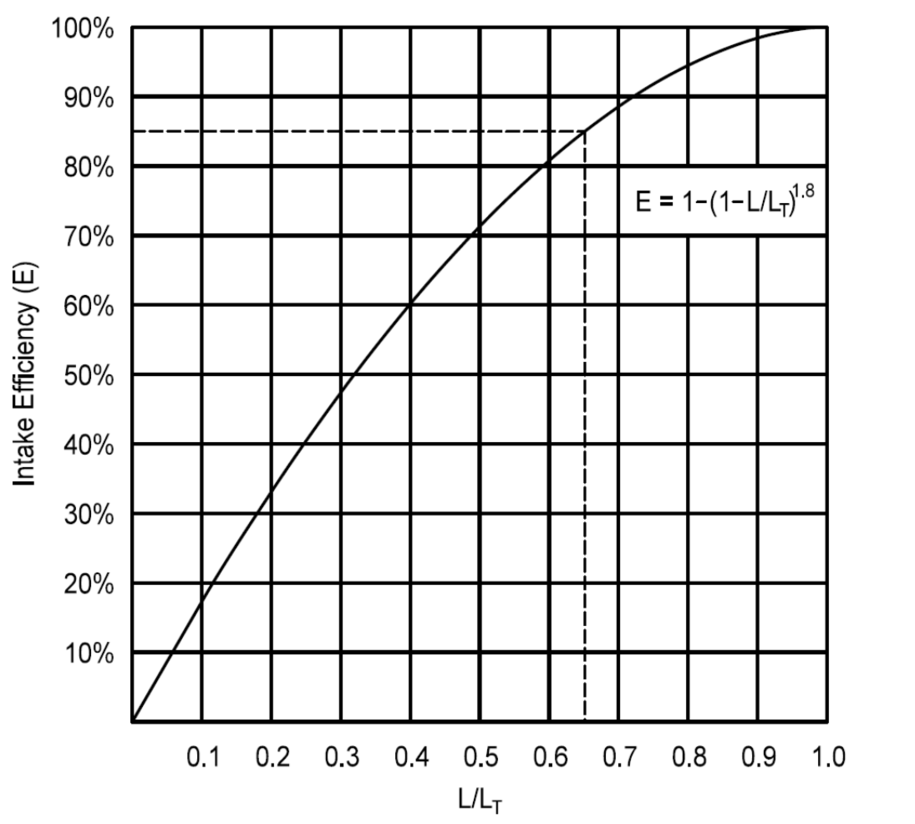
Intake efficiency (E) for open-throat curb intakes is determined by the following equation:
\(E = 1 - \left(1 - \frac{L}{L_T}\right)^{1.8}\) (Equation 4A-7_3)
where:
E = Intake efficiency.
L = Throat opening length, feet.
\(L_T\) = Throat opening length required to intercept 100 % of the gutter flow, feet.
Figure 1 shows the relationship between throat opening length and interception efficiency. The graph shows the point at which a large change in the length produces only a small increase in the percentage of gutter flow intercepted. This occurs at an efficiency of around 85%. As an example, if \(L_T\) = 12 feet and L = 4 feet, the efficiency is about 50%. Increasing the throat length to 8 feet produces an efficiency of about 85%, an increase of 35%. However, increasing the throat length another 4 feet to 12 feet produces an additional increase in efficiency of only 15%.
Sizing Open-throat Intakes on a Continuous Grade
Use 85% as an initial guideline for sizing open-throat curb intakes for the minor design storm. Efficiencies less than 85% are acceptable, but in cases such as these, designers should examine the downstream effect of increasing the throat length. Intakes downstream may be eliminated as a result of increasing the throat lengths of upstream intakes.
In some cases, it is desirable for intakes to operate at efficiencies greater than 85% in order to minimize bypass flow. For example, intakes upstream of pedestrian crossings should be sized to minimize bypass flow to reduce the potential for ponding or icing at crosswalks.
Sizing open-throat curb intakes is a two step process:
Determine the length of throat opening required to intercept 100% of the gutter flow (LT).
The length of throat opening required to intercept 100% of the gutter flow (LT) is calculated as:
\(L_T = K_T Q^{0.42} S_L^{0.3} \left(\frac{1}{n S_x}\right)^{0.6}\) (Equation 4A-7_4)
where:
\(K_T\) = 0.6.
Q = Gutter flow, \(ft^3/s\).
\(S_L\)= Longitudinal slope, ft/ft.
n = Manning’s coefficient (see Table 2 in Section 4A-6). For new pavements n = 0.016.
\(S_X\) = Cross slope, ft/ft.
For an intake with a depressed section at the opening, an equivalent cross slope (\(S_e\)) is used in place of \(S_x\):
\(S_e = S_x + \frac{a}{12W}\left(1 - \left(1 - \frac{W}{T}\right)^{\frac{8}{3}}\right)\) (Equation 4A-7_5)
where:
\(S_x\)= Cross slope, ft/ft.
a = Gutter depression depth measured from an extension of the pavement cross slope at the inside wall of the well, inches; see Figure 2 and Table 1.
W = Gutter depression width, ft; see Figure 2 and Table 1.
T = Spread, feet.
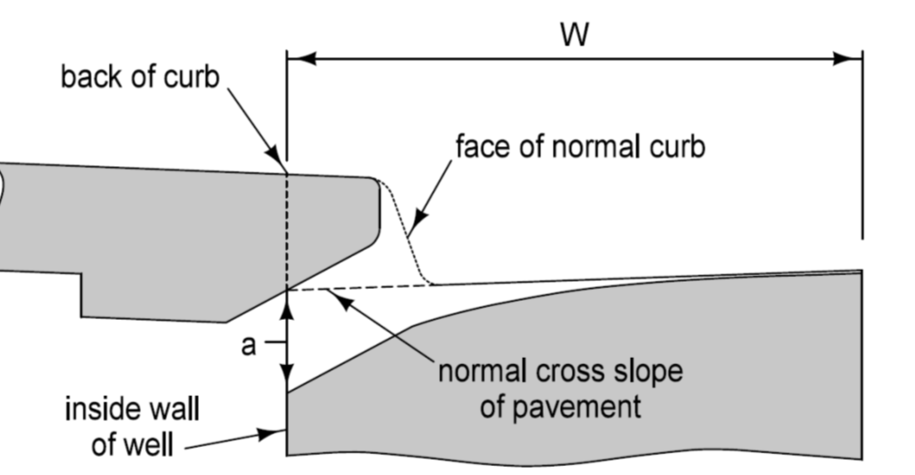
Figure 2: Illustration of a and W dimensions.
2. Choose an intake with a throat opening that will intercept approximately 85% of the gutter flow. To determine this, set E = 0.85 and rearrange equation 4A-7_3:
\(L= 0.6514L_T\) (Equation 4A-7_6)
Example Problem 4A-7_1, Open-throat Curb Intake on continuous Grade
HEC-22 provides additional guidance on how to evaluate and compare the interception capacity of inlets on grade.
Back to topOpen-throat Curb Intakes Located in Sags
To accommodate possible debris blockage, use double box intakes (SW-509 or SW-510) in sags. The following conditions need to be satisfied:
Use a 50 year recurrence interval (2% chance storm) for the minor design storm.
Use a 100 year recurrence interval (1% chance storm) for the major design storm.
For the minor design storm, the intake needs to picks up 100% of the gutter flow from both sides at the maximum allowable spread.
In addition to checking the maximum allowable spread, check for roadway crown or curb overtopping and resulting overland flow.

| Ignore flanking intakes when evaluating intakes in sags (refer to Section 4A-6 for more on flanking intakes). |
|---|
Check the spread on both sides of sag intakes. Use a longitudinal slope of 0.003 ft/ft (the minimum slope required to carry water in the gutter just before reaching the intake). If spread exceeds allowable encroachment, relocate or resize upstream intakes or add additional upstream intakes to reduce spread approaching the sag intakes.
Once the spread requirements on both sides of the intake are satisfied, verify the spread at the intake itself does not exceed allowable encroachment (see Table 1, Section 4A-6). Check the spread by determining the depth of ponding (d) shown in Figure 3 and using Equation 4A-6_2 to calculate spread. If spread at the sag intake exceeds allowable encroachment, relocate or resize upstream intakes to reduce spread at the sag intake.
How d is determined depends on whether the intake operates as a weir (gravity controls flow) or an orifice (pressure controls flow). Since d is not known, the designer must make an initial assumption about how the intake is operating. Start by assuming weir flow. For weir flow, d is determined as:
\(d = \left[\frac{Q}{C_W (L + 1.8W)}\right]^{0.67}\) (Equation 4A-7_7)
where:
d = Depth of ponding at the curb measured from an extension of the pavement cross slope, feet. Refer to Figure 3.
Q = Intercepted flow, ft3/s.
\(C_w\) = Weir coefficient, 2.3.
L = Length of throat opening, 8 feet for SW-509 and SW-510.
W = Width of gutter depression, 2 feet.
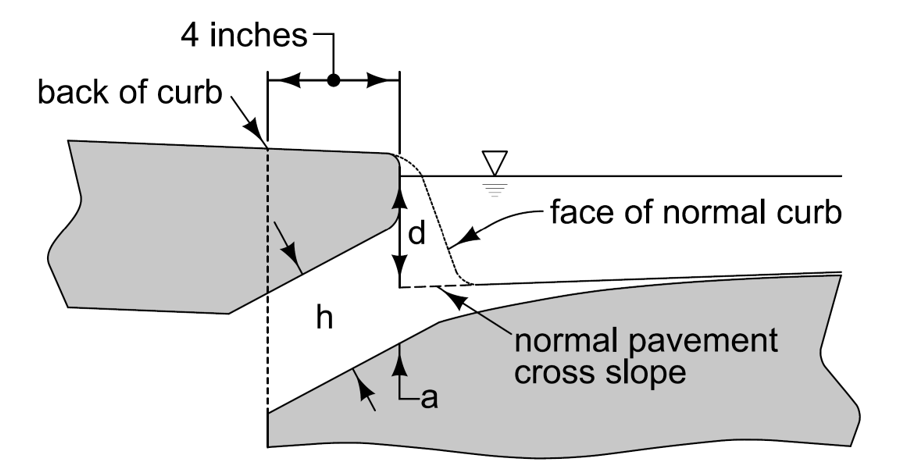
Figure 3: Illustration of d, h, and a dimensions.
Equation 4A-7_7 applies if:
\(d \le h + \frac{a}{12} = 0.75\ \text{feet}\)
where:
h = the height of the intake opening = 5 inches for Iowa DOT inlets, see Figure 3.
a = depth of gutter depression at the gutterline = 4 inches, see Figure 3.
If d > 0.75 feet, then the intake is considered to be operating as an orifice. To determine d, first the depth at the lip opening needs to be determined:
\(d_i = \frac{1}{2g}\left[\frac{Q}{0.67hL}\right]^2 + \frac{h}{2}\sin\theta\)
where:
\(d_i\)= Depth at the lip of the curb opening, feet. Refer to Figure 4.
Q = Intercepted flow, \(ft^3/s\).
h = Height of curb-opening orifice, 0.42 feet for SW-509 and SW-510.
L = Length of throat opening, 8 feet for SW-509 and SW-510.
g = Gravity, 32.2 \(ft/s^2\).
θ = 67°.
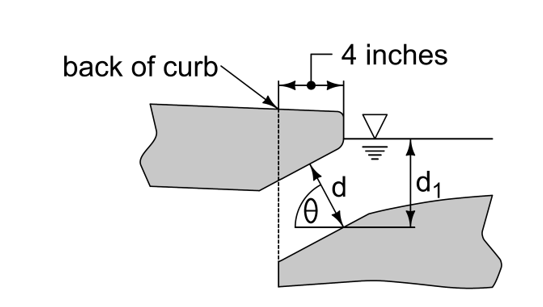
Figure 4: Depth at the lip of the curb opening.
To determine d, subtract 0.33 feet, the depth of the depression at the gutterline, from di.
Example Problem 4A-7_2, Open-throat Curb Intake in a Sag
Back to top
Example Problem 4A-7_1, Open Throat Curb Intake on Continuous Grade
Determine the size and efficiency of an open-throat curb intake on a continuous grade.
Given:
Cross slope: \(S_x\)= 0.03 ft/ft.
Manning’s coefficient: n = 0.016 (new pavement).
Gutter Flow: Q = 1.6 \(ft^3/s\).
Longitudinal slope: SL = 0.02 ft/ft.
Empirical Coefficient: \(K_u\) = 0.56.
Empirical Coefficient: \(K_T\) = 0.60.
The well for the intakes will be located outside of the pavement.
Width of depression: W = 2 feet. (see Table 1, SW-507-510 and SW-545).
Depth of depression: a = 6 inches. (see Table 1, SW-507-510 and SW-545).
Assume allowable width of spread is 6.0 feet.
Solution:
Calculate spread (T) using the process for Triangular Gutter Sections (Equation 4A-6_4):
\(T = \left[\frac{nQ}{K_u\, S_x^{1.67}\, \sqrt{S_L}}\right]^{-0.375} = \left[\frac{0.016 \times 1.6}{0.56 \times 0.03^{1.67} \sqrt{0.02}}\right]^{-0.375} = 5.89\ \text{feet}\)
This is within the allowable limit.
Since this is an intake with a depression, calculate the equivalent cross slope (Se) using Equation 4A-7_5:
\(S_e = S_x + \frac{a}{12W} \left( 1 - \left( 1 - \frac{W}{T} \right)^{8/3} \right) = 0.03 + \frac{6}{12 \times 2} \left( 1 - \left( 1 - \frac{2}{5.89} \right)^{8/3} \right) = 0.20\)
Calculate the curb-opening length required to intercept 100% of the gutter flow (LT) using Equation 4A-7_4 (Se is used in place of Sx):
\(L_T = K_T Q^{0.42} S_L^{0.3} \left( \frac{1}{n S_e} \right)^{0.6} = 0.6 \times 1.6^{0.42} \times 0.02^{0.3} \left( \frac{1}{0.016 \times 0.20} \right)^{0.6} = 7.10\ \text{feet}\)
Calculate the throat opening length (L) needed to intercept 85% of the flow using Equation 4A-7_6:
\(L = 0.6514\,L_t = 0.6514 \times 7.10 = 4.62\ \text{feet}\)
An intake with a throat opening of 4.62 feet is required. From Table 2, choose an intake which has a throat opening length (L) of 8 feet.
Determine the efficiency of the intake:
\(\text{Since } L > L_t,\; E = 100\%.\)
Determine the intercepted flow (Qi) by using Equation 4A-7_1:
\(Q_i = E Q = 1.00 \times 1.60 = 1.60\ \text{ft}^3/\text{s}\)
Determine the Bypass flow (\(Q_b\)) by using Equation 4A-7_2:
\(Q_b = Q - Q_i = 1.60 - 1.60 = 0.00\ \text{ft}^3/\text{s}\)
Discussion:
Item 6 is the theoretical efficiency of the intake and does not account for debris or damage to the inlet and assumes weir flow (assumes the inlet is not submerged).
The 8’ inlet efficiency is higher than 85%, however, if a 4 foot opening is chosen:
\(E = 1 - \left(1 - \frac{4}{7.10}\right)^{1.8} = 78\%\)
\(Q_i = E Q = 0.78 \times 1.60 = 1.25\ \text{ft}^3/\text{s}\)
\(Q_b = Q - Q_i = 1.60 - 1.25 = 0.35\ \text{ft}^3/\text{s}\)
This efficiency (sometimes referred to as “percent capture”) could be too low, especially if this intake precedes a crosswalk. As it may be difficult to visualize how much flow 0.35 ft3/s is, Equation 4A-6_2 and Equation 4A-6_4 could be used to further evaluate the depth and spread of water expected at the curb due to the bypass flow in this scenario.
Back to top