
Content Information
On this page...
General
Intersections designed for large vehicles (e.g., semi-trucks) need a large area of pavement to accommodate the vehicle’s swept path. The resulting large intersection can make it difficult to properly place a stop sign outside of the paved area where it is visible to drivers (refer to Section 2A-8 within the Traffic and Safety Manual for guidance on the proper placement of a stop sign). A stop sign island provides an area to place a stop sign where it is visible to a driver. Stop sign islands should only be used if the intersection geometry does not allow for proper placement of a stop sign outside of the paved area.
The primary function of a stop sign island is to place a stop sign near the stop bar. Secondary functions are: defining vehicle paths, delineating unused pavement areas, and reducing conflict severity by providing safer merging angles.
\({\Large Quick\ Tips:}\)
- In general, the use of raised stop sign islands is discouraged.
- Include painted islands at intersections, unless the District Office requests raised islands.
- Refer to Section 6A-2 for guidance on selecting a design vehicle.
Back to top
Island Type
Stop sign islands can either be raised (curbed) or painted (flush). Painted islands have fewer impacts to snow removal operations and have less maintenance costs.
\({\Large Attention:}\)
Include painted islands at intersections unless the District Office requests raised islands.
Back to top
Design
Stop sign islands should direct stopped drivers to a place where they can comfortably see other vehicles approaching from their left side. The island should also be large enough to command attention and give lateral clearance to the sign.
Driver’s Viewing Angle
Intersecting roadways are usually designed to meet at or near 90 degrees. This maximizes visibility for a stopped driver to view approaching vehicles. A stop sign island added to the intersection will affect the driver’s position at the intersection and visibility to approaching vehicles.
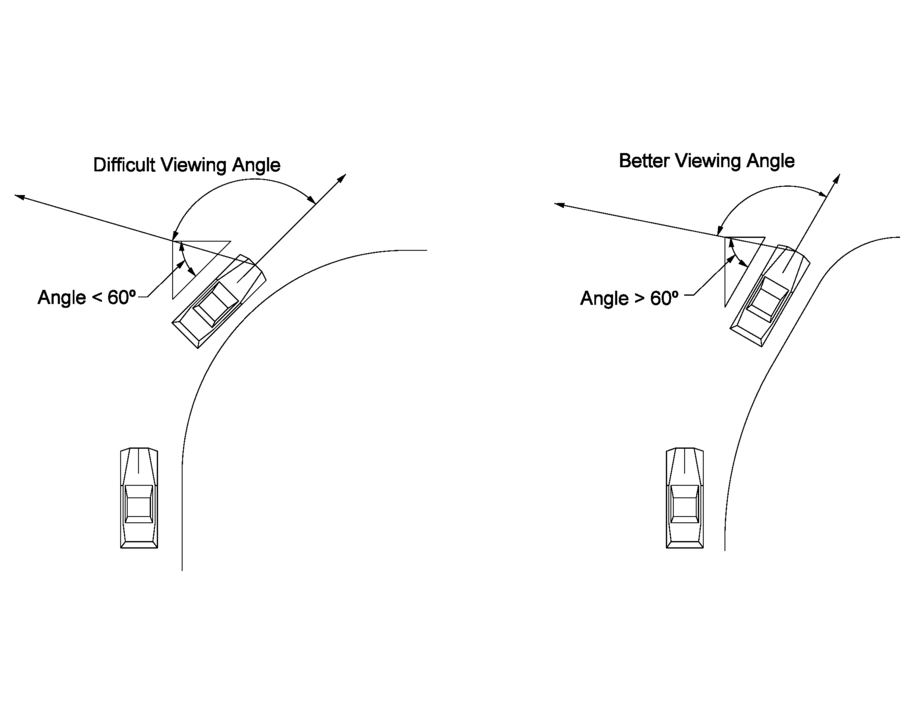
A stop sign island has a triangular shape (see Figure 1). The corner of the island pointed down the primary road should have an interior angle greater than 60 degrees. Drivers have to rotate their head and look back over their shoulder to view approaching traffic when the interior angle is less than 60 degrees. This is uncomfortable for drivers, especially older drivers. The degree of head rotation typically decreases with age. Figure 1 illustrates a driver’s viewing angle.
\({\Large Note:}\)
Intersections designed for a semi-truck and with an interior angle of 60 degrees provide enough space such that drivers in passenger cars can orient themselves at the intersection close to perpendicular with the cross street.
Skewed Intersections
Intersections that do not meet at near 90 degrees, and cannot be aligned to do so, will need to have the island designed for a comfortable viewing angle. Account for the intersection angle when calculating the viewing angle. Refer to the Design Examples section below for guidance on how to account for the intersection angle.
Island Dimensions
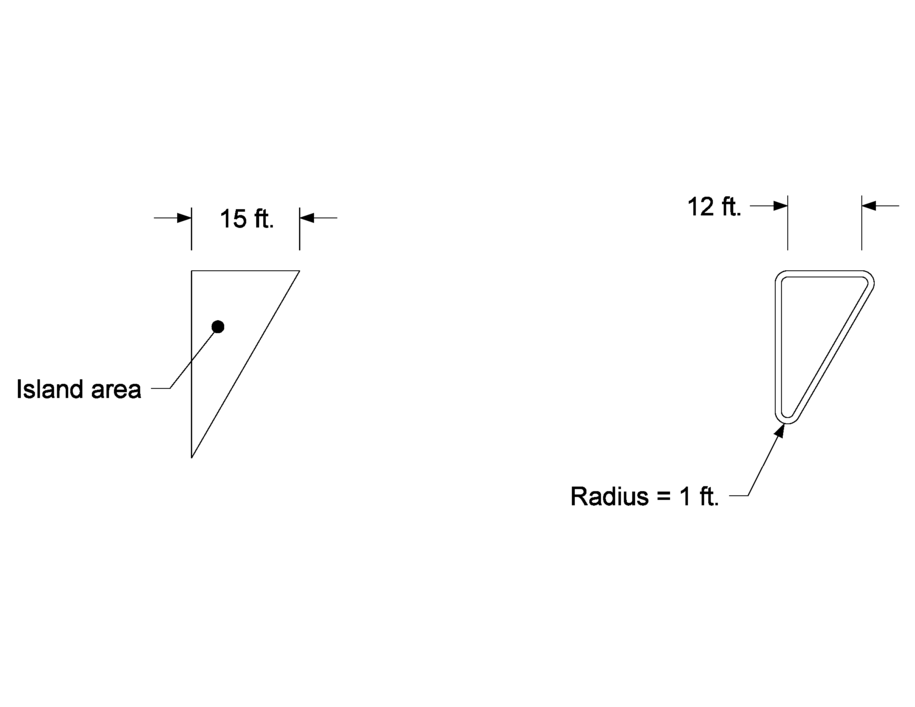
Guidance within the AASHTO Greenbook suggests corner islands (stop sign islands) should have an area of at least 100 ft2 for both urban and rural intersections. The minimum areas listed within the Greenbook are 50 ft2 for urban intersections and 75 ft2 for rural intersections. This guidance provides an island large enough to command attention and place the sign(s).
AASHTO guidance also suggests islands should not have a length of less than 12 feet on a side after rounding the corners of a raised island (round corners with a radius of 1 to 2 feet). 15 feet is sufficient length between the points for painted islands. The dimensions allow space for the sign and lateral offsets to the sign from the adjacent lanes. See Figure 2 for details of stop sign island dimensions.
\({\Large Note:}\)
Painted islands can have smaller dimensions, but the dimensions should accommodate a lateral offset to the sign(s) within the island. MUTCD criteria states to provide an offset of at least 2 feet from an adjacent lane to a sign. Refer to the Traffic and Safety Manual for intersection signing typicals and figures.
Stop Sign Islands within a Median Opening
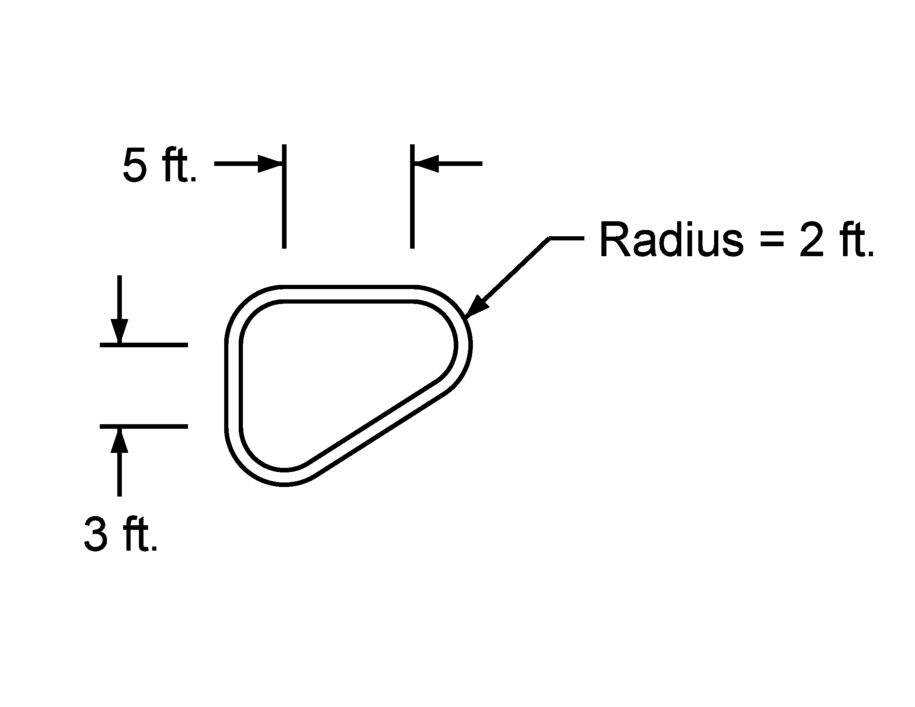
Stop sign islands are sometimes added to a median opening to place the stop sign (or yield sign) closer to the stop bar (or yield bar). These islands (see Figure 3) are smaller than standard islands and are usually added to intersections with a far side crash pattern.
Offset
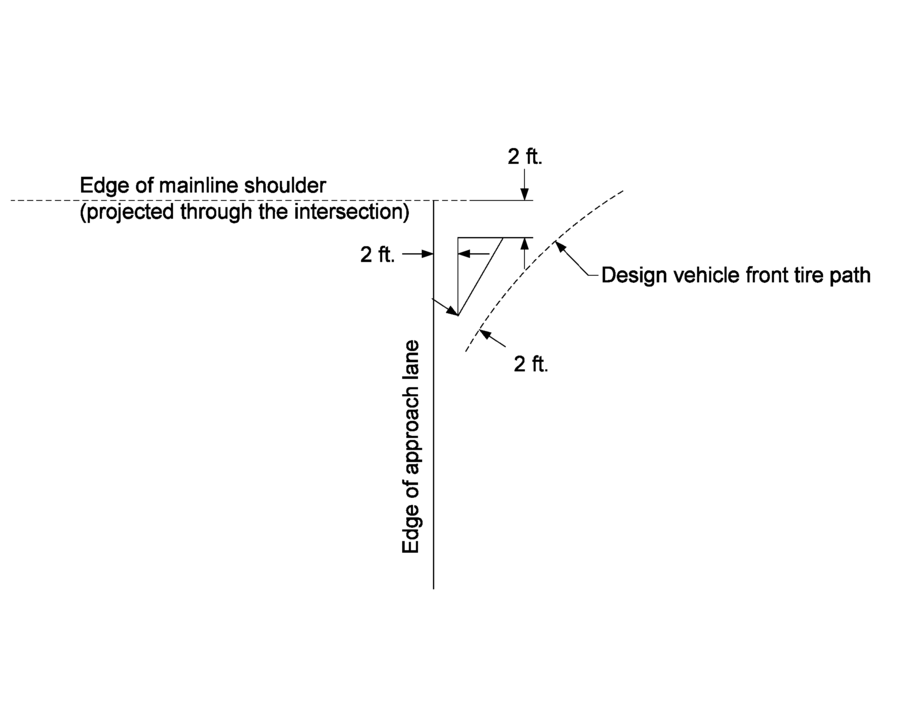
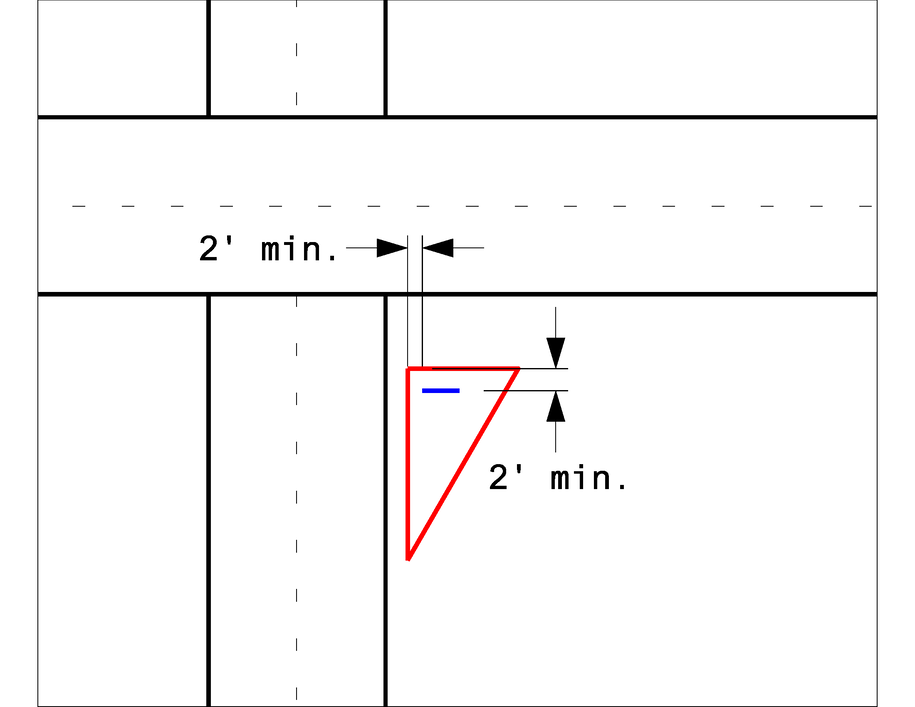
The minimum offset from an edge of traveled way to the island is 2 feet. For rural intersections, the face of island near the through roadway should have an offset equal to the shoulder width (projected through the intersection) plus an extra 2 feet. The offsets to face of a curb for raised islands also apply to painted islands. Refer to Figure 4 for details of offsets to an island.
Curb Type
Raised islands in a rural high-speed environment should use a 4 inch sloped curb (see PV-102).
Refer to Section 3C-2 for guidance about selecting a curb type and size.
Back to top
Example Problem 6A-10_1: Designing an Intersection with a Painted Stop Sign Island
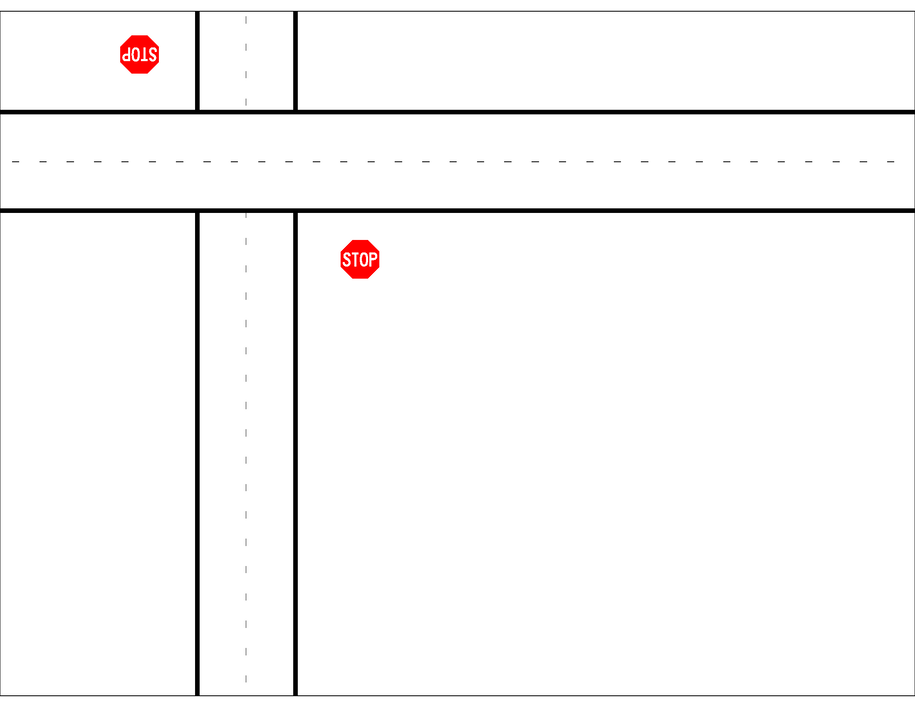
Design an intersection to accommodate the turning path of a semi-truck with a stop sign island.
Given:
Perpendicular intersection between two-lane roadways.
Two-way stop controlled intersection.
Intersection design vehicle – WB-67.
Solution:
- Design the island
- Locate the face of the island near the mainline and approach lane.
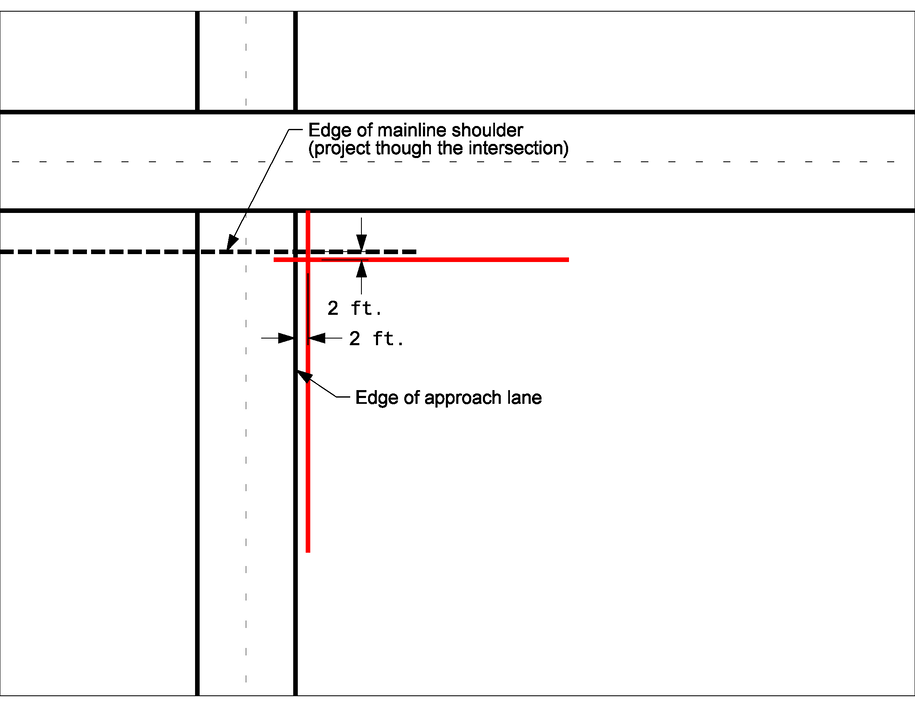
- Design the edge of the island near the mainline
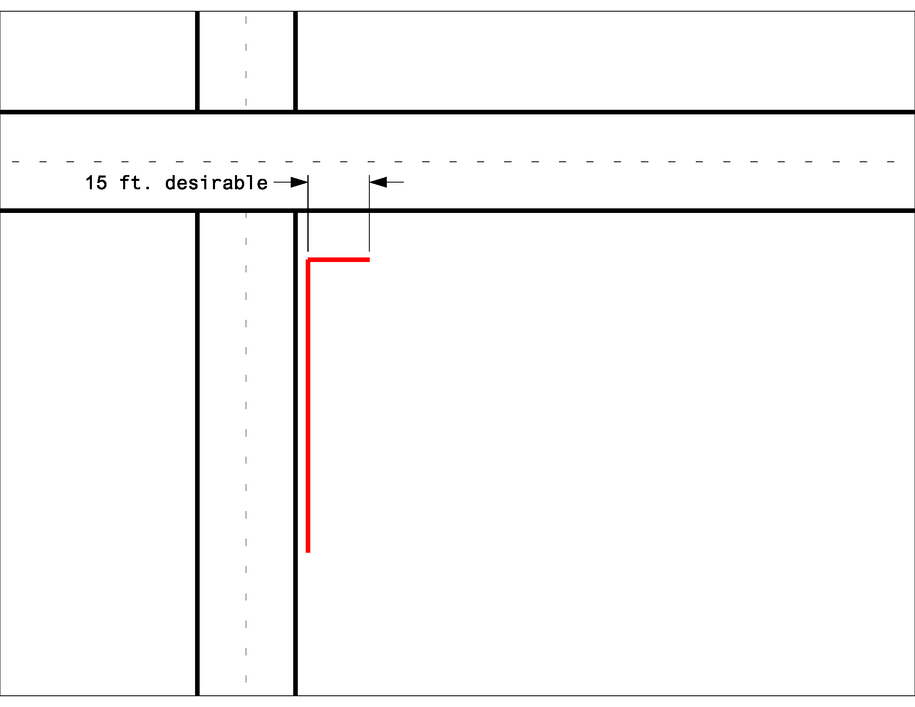
- Determine the angle of the island pointed down the mainline.
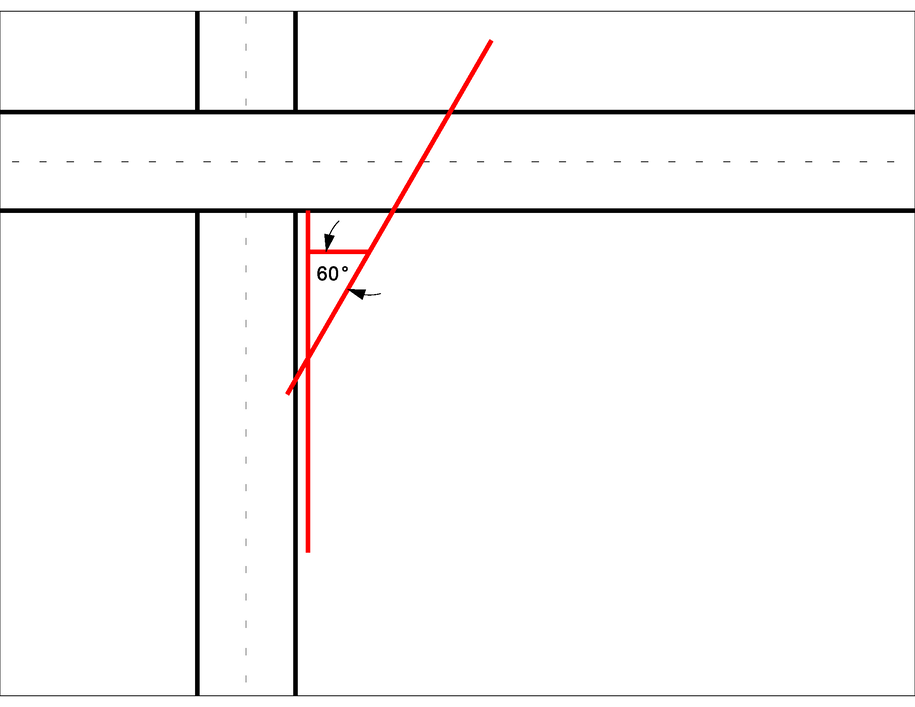
- Intersect lines to design the island. Check the area and clearance to the sign(s) within the island.
- Design the edge return
- Create the vehicle path
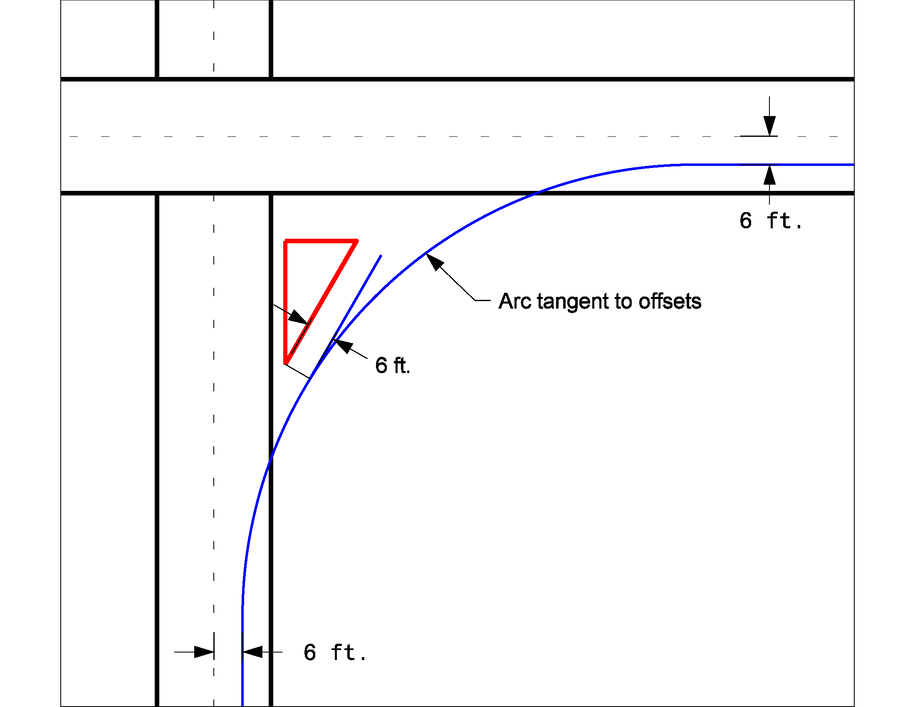
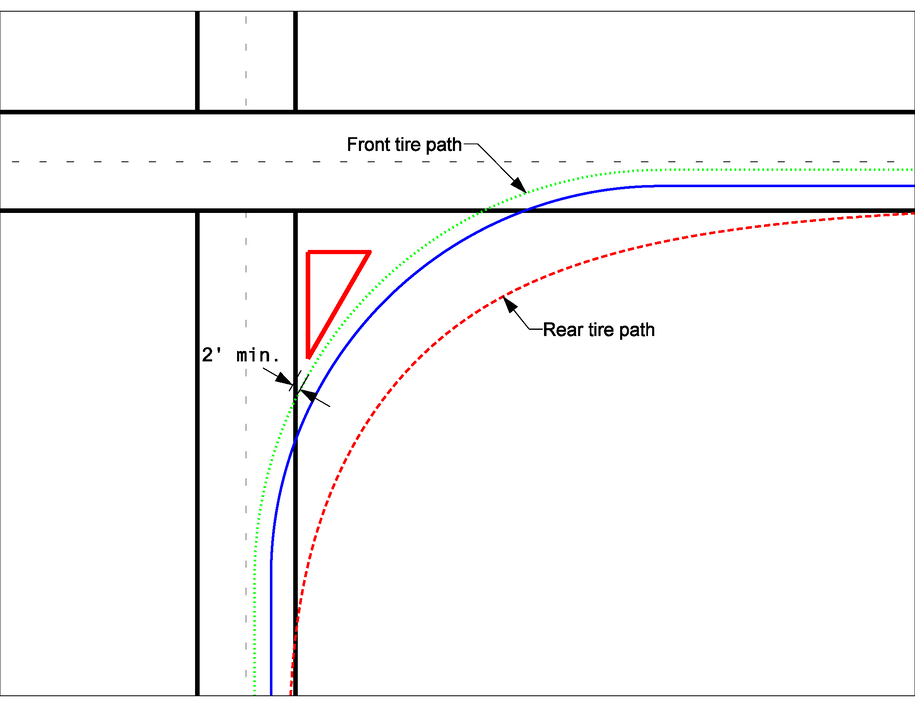
Discussion: When determining the offset from the island, the designer should use a distance equal to ½ the design vehicle width plus an additional 2 feet, as the minimum distance.
To develop the turning path, the designer can place tangent to each offset.
- Simulate the selected path and check offset to the island.
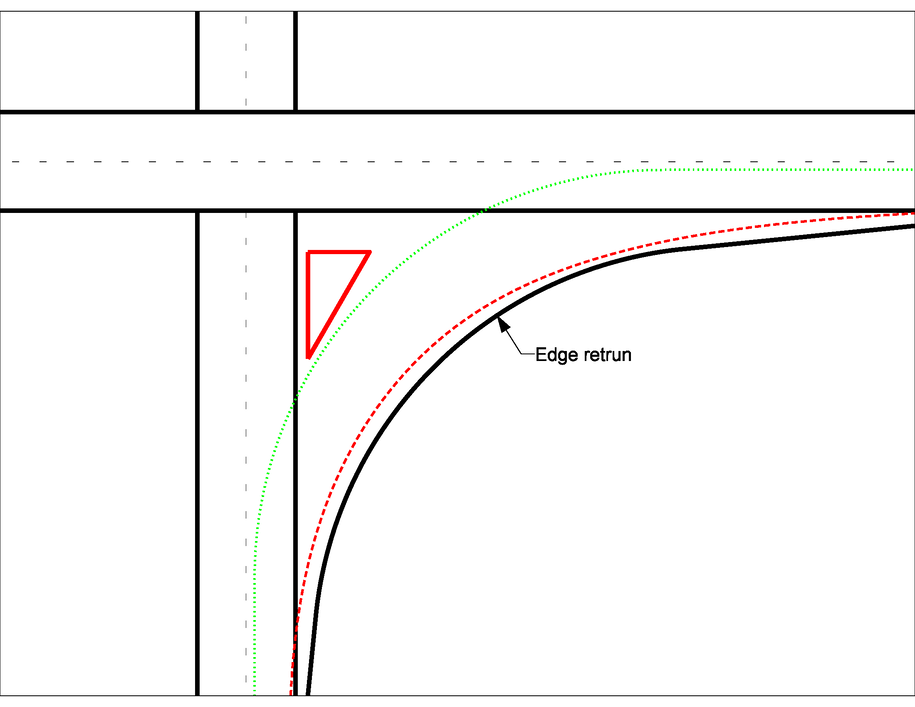
- Design the edge return.
Back to top
Example Problem 6A-10_2: Design a Stop Sign Island for a Skewed Intersection
\({\Large Quick\ Tips:}\)
Intersections with acute angles less than 75 degrees are usually realigned to be perpendicular. Refer to Section 6A-08 for guidance.
Case 1: Right-skewed Intersection
Given:
Right-skewed intersection between two-lane roadways.
Two-way stop controlled intersection.
Intersection design vehicle – WB-67.
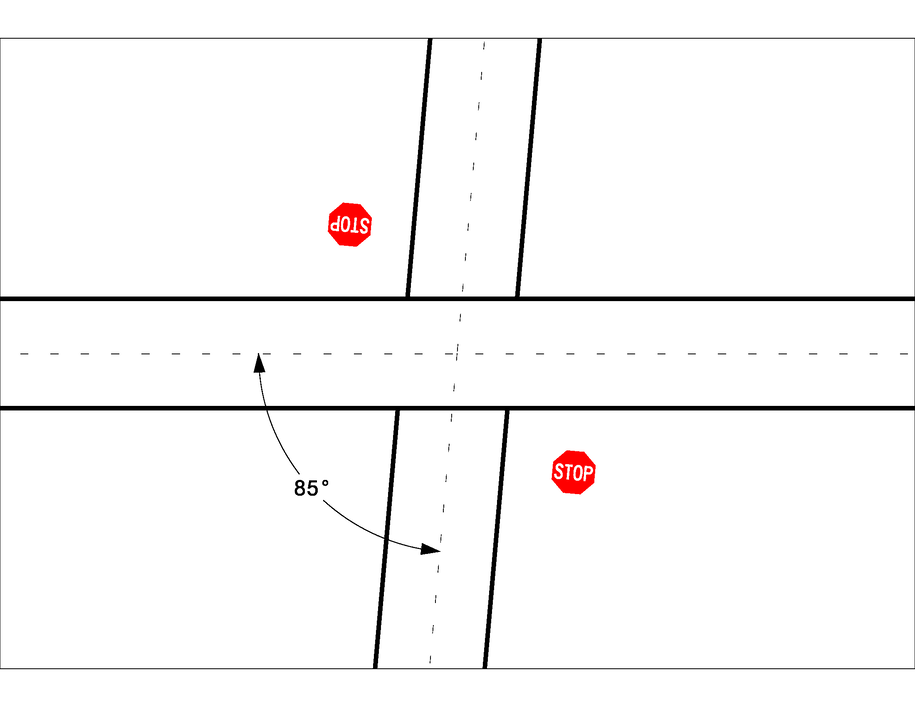
Solution:
Design the island
- Locate the face of the island near the mainline and approach lane.
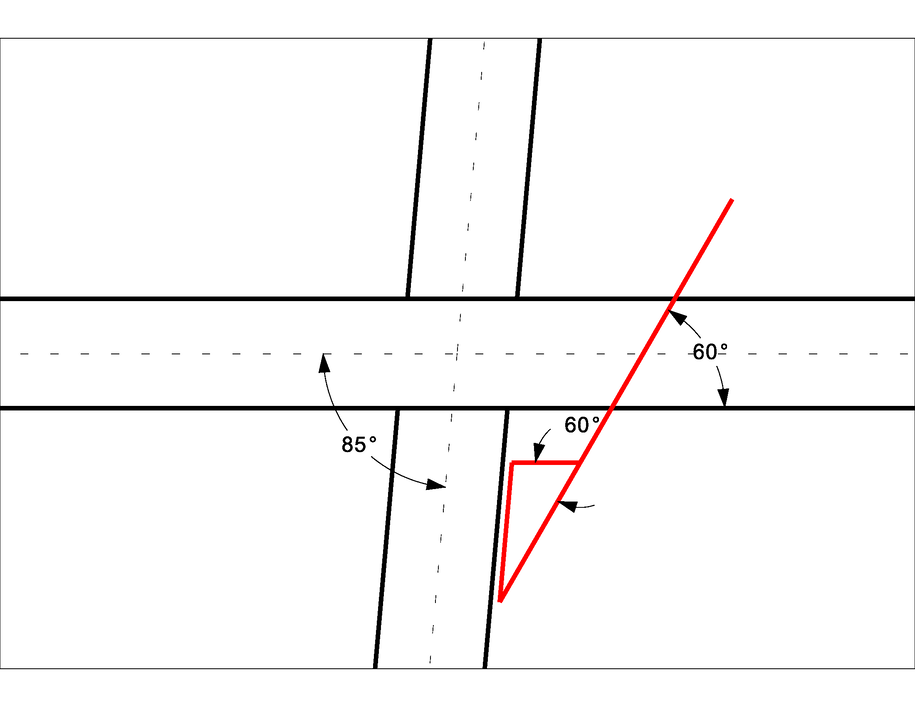
- Check the area and clearance to the sign(s) within the island.
Case 2: Left-skewed Intersection
Given:
Left-skewed intersection between two-lane roadways.
Two-way stop controlled intersection.
Intersection design vehicle – WB-67.
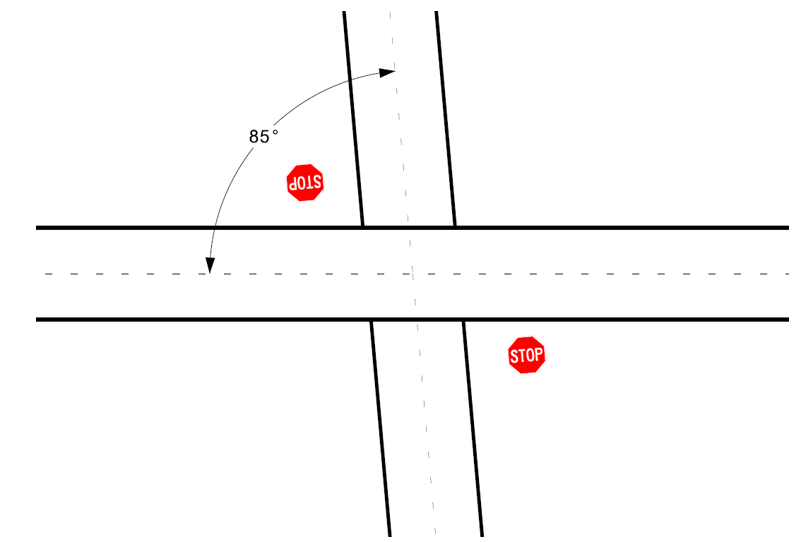
Design the interior angle of the island
- Locate the face of the island near the mainline and approach lane.
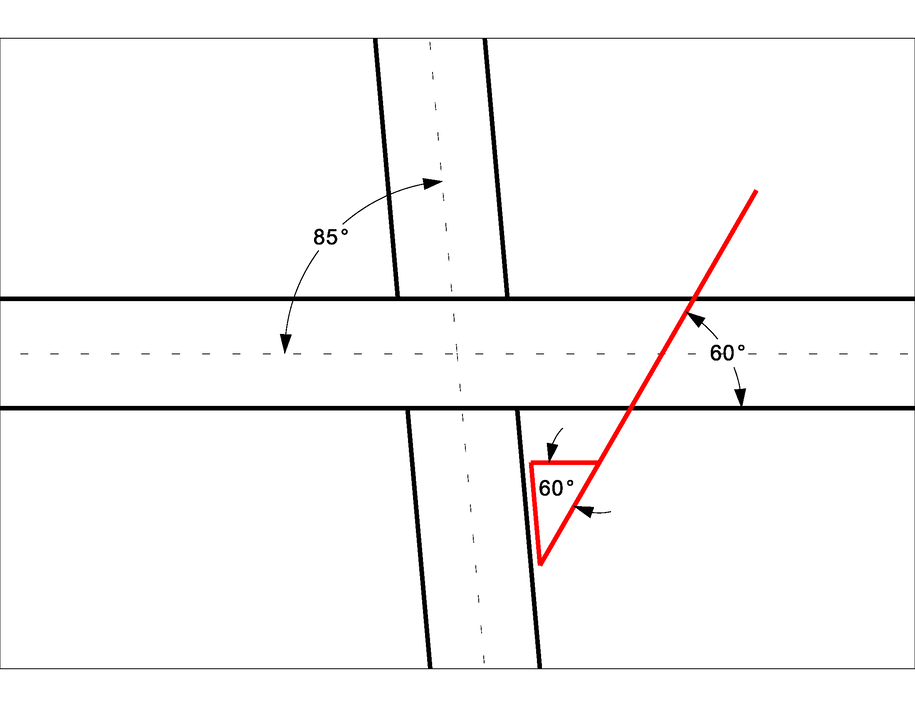
- Check the area and clearance to the sign(s) within the island.